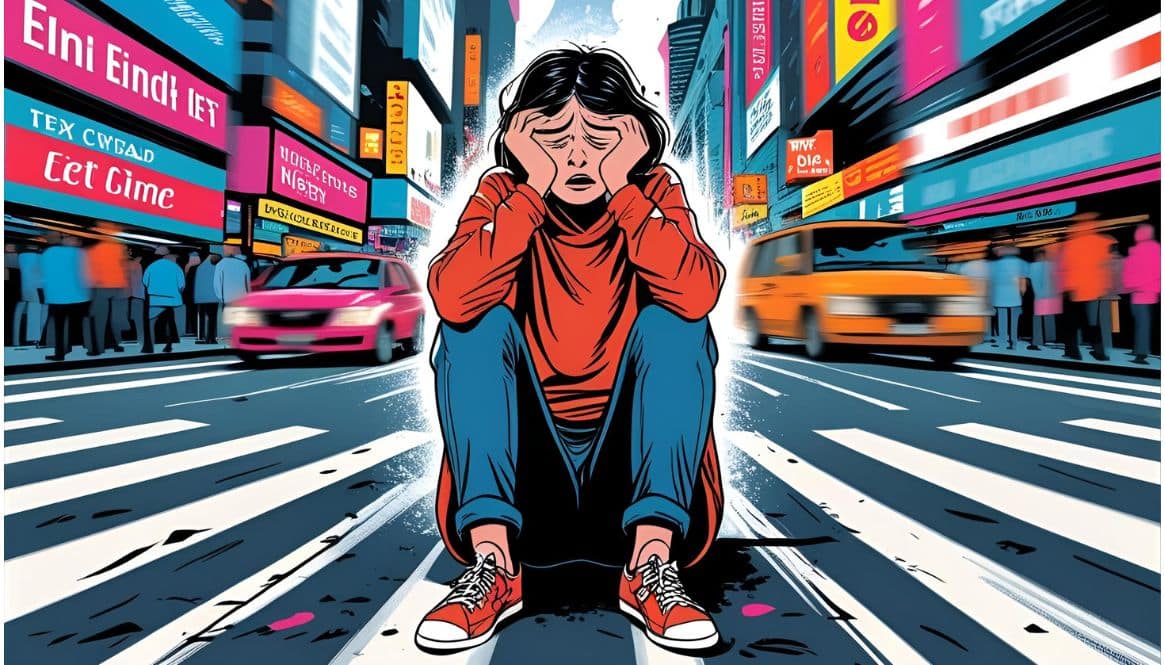
Are you being run over by the rush of modern life, or do you have ADHD, or both?
We live in an age where the rate of change and stimulation due to developments in technology is at a level far greater than has been experienced by human beings ever before. The length of time human beings have lived in industrialised cities disconnected from nature is also something that we have only been experiencing for the last approximately 300 years. Change began to happen rapidly around the mid 1700’s, but in the last 50 years the rate of change has been massive. Some people respond to this with more resilience than others. People who have experienced trauma or who are highly sensitive are more effected, and have a greater likelihood of being run-over by the rush of modern life. In this post I want to explore burnout from a physical and sensory over-stimulation point of view. My last post explored it more from the point of view of our subconscious patterns of belief and emotion.
Human biology is still animal biology. Our bodies are still wired for survival. We still have a primal limbic nervous system embedded within our more evolved brain. That primal brain gets nervous about change because change involves the unknown, and the unknown could contain danger. So, what happens when you put a human nervous system in an environment of rapid change disconnected from the rhythms of nature that it has evolved with? Then, add into that escalating use of technologies that overstimulate the brain, train short attention spans, cause dopamine addiction and reduce the need for us to use our memory. Plus, also add in beliefs that busy-ness, achievement and pushing through at all costs are highly valued, and that rest is lazy and any unproductive behaviour is a waste of time. The common response to all this is some level of:
- Anxiety
- Overwhelm
- Overstimulation
- Over-thinking
- Racing mind, unable to switch off
- Feeling scattered
- Shut down
- Easily distracted
- Feelings of being out of control or disconnected
- Insecurity
- Feeling unsafe or under threat
- Sleep difficulties and insomnia
- Brain fog
- Forgetfulness
These are all symptoms of nervous system dysregulation. This can develop as a physiological response to psychological trauma, addictions or chronic stress where your body becomes stuck in the stress response of fight, flight, freeze or fawn. When your nervous system is dysregulated, it can be difficult for your body to return to a state of relaxation or balance and homeostasis. This can lead to issues such as finding it hard to concentrate, persistent anxiety, sleep difficulties and exaggerated responses to minor things.
Nervous System Dysregulation and ADHD
A lot of the issues listed above are also characteristics of Attention Deficit Hyperactivity Disorder which is commonly known as ADHD. There is a lot of talk, and a lot of confusion about ADHD at the moment so let’s begin with clarifying what it is. ADHD is a neurological condition that affects how the brain functions. It is not simply behavioural. Brain scans of people with ADHD show that their brains look and function differently to people without ADHD. One of the main causes of ADHD is genetics, however it can be connected to trauma. Very generally, characteristics of ADHD are:
- Hyper-awareness, easily distracted by things in the environment
- Feeling like you constantly have multiple tabs open in your head
- Wanting to do anything and everything right now
- Easily over-stimulated
- Fidgeting, restlessness, finding it hard to sit still
- Experiencing emotions in extremes and moving into those emotional extremes quickly and easily
- Hypersensitivity/highly sensitive
- Overthinking/rapid thinking
- Inattention to details
- Forgetfulness
- Disorganisation
A lot of these characteristics are similar to those listed above for nervous system dysregulation and there is a reason for that. The amygdala in an ADHD brain is often in a heightened stress state of fight or flight, and there can be a link between experiencing trauma, especially as a young child, and ADHD.
How Do you Know if You Have ADHD?
This can leave many people wondering if they have ADHD. They may see posts on social media and think I can relate to those things, or they may even do an online ADHD test and score highly. How do you know if you are experiencing ADHD, or nervous system dysregulation, or something else. I will always advise seeking professional help if you are experiencing any issues that are causing you concern regarding your mental or physical health. However, if you are more just in a curious state then the following points may help you get some clarity around whether what you are experiencing is ADHD or nervous system dysregulation.
- Symptoms ease with nervous system regulation practices
If you are experiencing any of the issues listed above then you could try engaging in nervous system and vagus nerve toning practices and/or having sessions with a trained and experienced embodiment coach. If working with an embodiment coach and somatic practices begins to reduce the symptoms you are experiencing then it is most likely that your symptoms are the result of isolated nervous system dysregulation and not ADHD. Nervous system dysregulation is a body based issue and the most effective way to work with it is through somatic (body based) therapy practices, rather than talk or cognitive based therapies.
You cannot talk your way out of nervous system dysregulation because it isn’t happening in your thinking brain, it is happening in your nervous system. You can’t think your way out of a nervous system problem any more than you can think your way out of a broken leg.
Beth from Neurotoned
This was how I began to work out that there was more going on for me than just nervous system dysregulation. When I trained as a VITA coach I engaged with eighteen months of intense nervous system regulation practices and embodiment coaching. I experienced a great deal of mental and emotional healing and transformation during this time and did notice that I didn’t have some of the same thoughts and behaviours after the programme as I had habitually had before. I felt much more settled, resilient and confident within myself. My nervous system felt much more regulated, but I was still experiencing many characteristics of ADHD and these felt more like personality traits than something being out of balance in my nervous system.
2. You have other characteristics of ADHD
Another indication that you may have ADHD rather than be experiencing general nervous system dysregulation is that you have characteristics of ADHD that are related to brain function rather than stress response. For example, you consistently have so many ideas, interests and passions that you have difficulty managing them all. Or, you have difficulty tracking time, regularly underestimate how long it will take to do things and as a result are usually running late. A week may feel like a month because you cram so much mental and physical activity into it. Or you may be very impulsive and habitually jump into things without thinking them through first, sometimes dangerously so.
3. You have had these characteristics since early childhood
With the growing awareness around neurodiversity many people are now being diagnosed as an adult. However, if you have ADHD, then you would have had these characteristics since early childhood because they result from the way your brain was set up to function. You may have learned how to manage or mask them effectively, but for me what happened was as I began to learn more about how neurodiversity could manifest, I started to see how I had masked different characteristics and learned how to work around my forgetfulness, hyperactivity and popcorn brain. For me learning about ADHD and other forms of neurodivergence has given me more language to understand my lived experience of the world.
ADHD Burnout
There is also something known as ADHD burnout which is experienced by people who have ADHD. It is a state of physical, mental and emotional exhaustion that can be triggered by more ADHD specific stressors such as:
- Experiencing a lot of changes or transitions in daily life
- Sensory overload
- External demand for sustained attention or organisation
- The mental load of masking ADHD traits in social and professional settings
- Difficulties with time management leading to a sense of being constantly rushing or in crisis mode
- Feeling emotions intensely
ADHD burnout is characterised by symptoms such as:
- Overwhelming fatigue
- Brain fog
- Difficulty maintaining focus and attention
- Struggling to complete basic daily tasks – wanting to but not being able to access the neurological executive functioning to actively do things, meaning that it requires a huge amount of mental effort to engage with any task a huge amount of mental effort to engage with any task
- Emotionally flat or experiencing more difficulty regulating emotions
If you suspect that you may be experiencing ADHD burnout then I recommend seeking support from people who are trained and experienced in how to manage ADHD burnout. I wanted to give an informational outline of what it is in this article, but as it is a very specific issue I do not feel qualified to give advice on how to manage it. Two good resources that I have come across with regards to ADHD burnout are Dr. Mega Anna Neff from Neurodivergent Insights and Kelly Banks from The Dopamine Dispatch
Your Body Holds the Keys
If you are experiencing burnout there can be many reasons why. It could be because of subconscious beliefs that you have especially those around needing to earn your worth through productivity, that it is better to give than to receive or that rest is unsafe. It could be due to the level of disconnection and rapid change that you are experiencing living in a modern technology rich society. It could be because of ADHD or other forms of neurodivergent brain function which result in an far greater mental load to just “do life”. It could be all of the above. For any form of burnout though, my advice would be to start with listening to your body. Your cognitive mind can tell lies and be seduced, but your body holds your truth.
If you would like to talk to me about anything I have written about here then feel free to message me or email me at info@janinelattimore.com.
Sources:
https://www.southpacificprivate.com.au/our-blog/mental-illness/adhd-vs-nervous-system-dysregulation