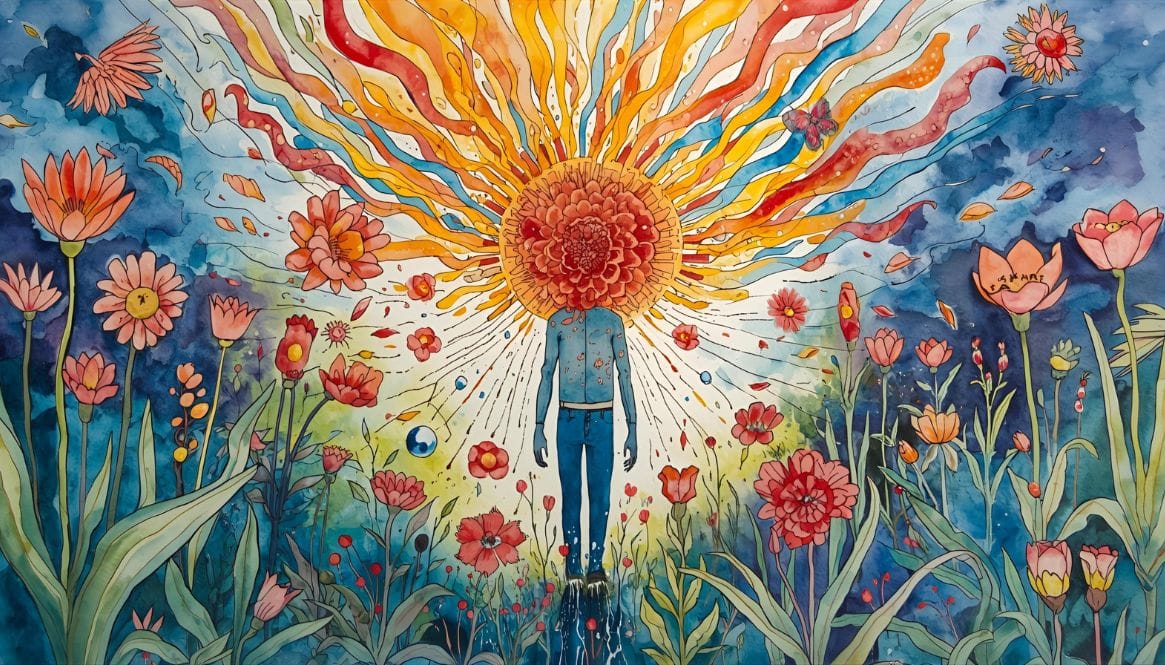
Why HSPs often people please, and how to practise self-care to prevent overwhelm and burnout.
Are you highly sensitive to changes?
Are you easily distracted by sounds in your environment?
Do you notice smells or tastes more intensely than other people?
Do you have a high need for space around you?
Are you deeply moved by art and beauty?
Are you very in tune with the feelings of others?
Do you identify other people’s needs without them telling you?
If you answered yes to most or all of the questions above then this article is for you, and you are probably a highly sensitive person (HSP).
Next questions:
Do you suppress this sensitivity?
Do you fight it because you think it isn’t normal and that there must be something wrong with you?
Do you mask it and hide it because society is uncomfortable with your excess?
What Is a Highly Sensitive Person (HSP)?
Being highly sensitive is a personality trait and is also referred to as sensory processing sensitivity. It is more than just being introverted, shy or emotional, though it can include all of these elements. For highly sensitive people, it is like the volume is tuned up to high on all of their senses. They are very aware of sounds, smells, movement, temperature, textures, tastes, light and space in their environment. Highly sensitive people also read other people’s emotions easily and feel things very deeply for themselves.
The Link Between High Sensitivity and People Pleasing
Many people who engage in people pleasing behaviour are also highly sensitive people. In fact, there may be a direct link between high sensitivity and people pleasing. An article on business wellbeing website First Steps New Zealand notes that one of the signs of being a highly sensitive person is to “go above and beyond to please others.” This suggests that most people who are highly sensitive also engage in people pleasing behaviour, however not all people who people please are highly sensitive.
Highly sensitive people are deep carers with big empathic hearts. Giving and helping comes naturally to us (yes, I am an HSP), and we like to ensure that everyone is taken care of and happy. These beautiful, kind characteristics are to be celebrated, but they can also make us more prone to people please and over give, and this can be even harder on highly sensitive people because we also get over-stimulated, over-socialised and over-whelmed much more easily than people who have normal sensitivity levels. Highly sensitive people who people please prioritise one aspect of their character at the expense of their other needs to an even greater degree than other people because their need for quiet, rest and solitude is so much greater. The problem is that for highly sensitive people, people pleasing requires an even greater sacrifice of your self and your personal needs.
Society plays a big part in this. Giving is socially acceptable. The kindness and empathy of HSP’s are virtues that are socially praised. However, our needs for quiet spaces and time alone to recharge are not. Those are often misunderstood and criticised by others, and suppressed and hidden by ourselves. As a result our self-care needs often go unrecognised and unmet. For example you may notice that you are sensitive to lots of noise, bright lights and crowded places, but may not realise how much those things are causing you stress and draining your energy because they don’t seem to affect other people. Or, you may over-ride signs of your overwhelm and burnout because you think you are being too sensitive and should be able to tolerate and do more.
Highly sensitive people tend to give extra care to others, but also need to give extra care to themselves. You are a high maintenance person, and that’s okay, because you also have unique gifts to offer, and you can offer more of those when you are nourished yourself. Sensory processing sensitivity is not a mental health condition, it is a rare neurobiological trait. There is nothing wrong with you. Highly sensitive people have finely tuned nervous systems, elevated brain activity and process things more deeply. Those are strengths, but like a precision racing car, you need a lot of careful servicing to perform well. That isn’t common knowledge, even to us HSP’s, because we only make up about 10-20% of the population.
Self-Care Strategies for Highly Sensitive People
Get to Know Yourself
Observe how you respond to things in the environment and what is comfortable for you and what isn’t. Learn to identify the signs of your nervous system becoming overwhelmed. Pay attention to the information that your body is expressing about how it functions. Get to know your own limits, and be accepting that your limits may be less than other people’s. Identify what you need not just to be okay, but to be at your best.
Ask for What You Need
When you know and understand yourself it can help you feel more confident to ask for what you need from others. Also, if you model giving yourself what you need then it begins to become normal and expected both for you and those around you. Be clear about what your priorities are, and let others know what you would like from them. I understand that learning to ask for what you want and risking someone being upset with you can be really hard for a HSP. However, it does get easier with practice. If you would like some more information about how to say “no” to people and ask for what you need, including suggestions for what words to say, then check out my ebook How to Say No Without Guilt. You can buy it from the resources page on my website or get it for free when you subscribe to my weekly newsletter.
Withdraw When You Need To
It’s okay to be a turtle and withdraw into your safe place when the world becomes too much. When things start to feel overwhelming or you notice signs that you are becoming stressed or emotionally dysregulated, then give yourself permission to leave or take a break. There are lots of different ways you can do this, for example: wearing noise canceling headphones, going for a walk, having a bathroom break, sitting in your car, being in nature or curling up in bed for a nap.
Embracing Your Gifts as a Highly Sensitive Person
As a highly sensitive person you are unique, but not alone. Your difference does not mean that you are broken. You are the type of person who can see a rainbow of colour where others see only white. Celebrate your gifts, listen to your needs, and take care of yourself. I leave you with a beautiful poem I came across recently written by a fellow HSP, SheHermit✍️🪔
Selectively Social
Some of those loners
Reclusive daydreamers
Who keep to themselves
Don’t dislike people
They are not cold or distant
They crave depth in conversations
Ideas that feed their mind
Vulnerable, emotionally mature interactions
That make their soul come alive
Intrigued by nuance
Synchronous patterns
Predictability feels like a trap
Small talk tires them
Shallowness drains them
They prefer their own company
They observe intently
Read between the lines
Pick up on micro expressions
Shifts in energy
Unspoken tension in the room
See motives behind words
Insincerity in tones
Notice disingenuity
The person beneath the mask
They are not simply quiet or introverted
Reserved or unsocial
Shrinking violets or
Wallflowers
They are selectively social
Creative night owls
That stay mentally awake
When the world sleeps
Reading, learning, journaling
Analyzing, reflecting, dreaming
Absorbing, Assimilating
Rewiring their brains
Distilling their novel experiences
For clarity, coherence and meaning
Perceptive Minds that withdraw from society
To the safety of their inner worlds
For protection and peace
To recharge, reflect and grow
In the reassuring comfort
Of silence and solitude
This post is public so feel free to share it with someone you think would appreciate it.
Want More?
Thank you for reading this post. If you would like weekly insights and tips from me about how to transform your people pleasing habits and have more confidence, love, respect and freedom then you can subscribe to my People Pleasing Evolution newsletter. When you subscribe be sure to check out the welcome email from me as it contains a link to my FREE ebook: How to Say No Without Feeling Guilty. This ebook It gives you practical tips to successfully overcome the three main issues for people pleasers learning to say no:
1. Knowing what words to say (sample phrases provided)
2. Confidence to say the words
3. How to manage feelings of anxiety and guilt about saying the words
Subscribe to my weekly newsletter via Substack
Learn about more of the books and resources I have created on the Resources page of my website, janinelattimore.com