When does being nice become unhealthy?
“Kindness is the sunshine in which virtue grows.” – Robert Green Ingersoll
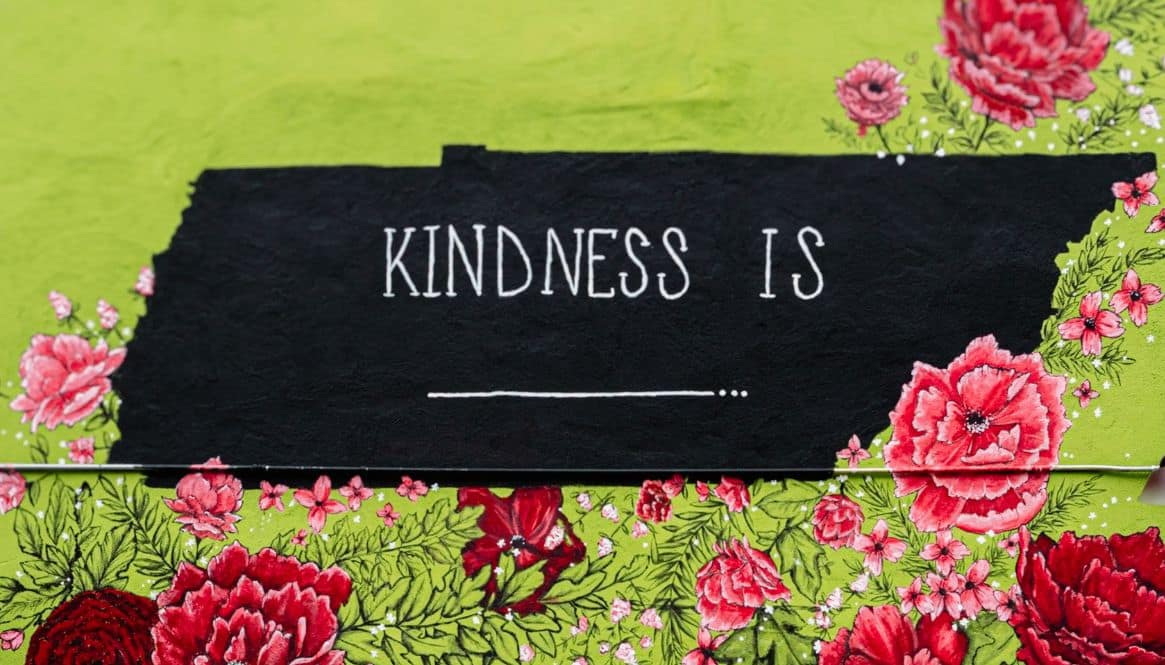
Kindness is a virtue. It is seen as something to aspire to – “in a world where you can be anything, be kind”. People who are nice, caring and helpful are accepted and liked socially. Kindness is listed among the twenty-four VIA Institute on Character strengths and is defined with the affirmation:
“I am helpful and empathic and regularly do nice favors for others without expecting anything in return.”
So we can feel good about being a person who takes care of others right? We can feel good about being someone who is always kind and helpful, someone who gives selflessly, right? Yes, absolutely. Kindness is a good thing – except when being the constantly nice one has unhealthy consequences for you. But, how do you know where the line is? How do you know when you are exhibiting healthy loving kindness versus unhealthy people pleasing? Here are some signs your niceness has become unhealthy, and your helping is doing you harm:
- When you are overextending yourself and habitually giving to the point of exhaustion
- When you are not being honest about what you truly think or feel
- When you are saying yes but you want to say no
- When you feel frustration, resentment or anger – but hide that and help others anyway
- When you see it as your job to keep everyone else happy
- When you continually compromise what is important to you
- When your needs are consistently not being met
- When you are excusing hurtful or harmful behaviour
- When you absorb blame and take responsibility for problems that aren’t yours to “keep the peace”
- When you are staying small so as not to upset someone else
- When you feel like you are “walking on eggshells” around someone
- When your care is coming from a place of insecurity rather than love
- When you find it hard to identify what you want, feel anxious about having personal desires or usually just go along with what other people choose
- When you give everything to taking care of others and feel invisible yourself
We people pleasers can be very accommodating, and tolerate a lot of things that others couldn’t or wouldn’t – and we often take a sense of pride in that strength in ourselves; our ability to put up with things that others can’t. It is a strength, and it is a quality to be honoured, but our expression of it usually comes at a great cost to ourselves. We also tend to claim it for our worthiness as in; “See how good I am. See how much I can carry without breaking.”
These are all ways in which we abandon ourselves with the aim of keeping ourselves loved and safe by keeping other people happy. And I say we because everything on that list has applied to me. What I would like you to know is that this is not who you are. It is a way of behaving. It is one choice of coping behaviour for navigating life. And you can choose it. No judgement from me. It works for you on some level otherwise you wouldn’t keep doing it. However, there is usually frustration, sadness, resentment and anger simmering under that choice of behaviour. We may not be fully aware of it, but that mental and emotional dis-ease usually starts to show in our body as things like muscle tension, headaches, inflammation, autoimmune issues and cancer. Our suppressed feelings eat away at us and cause stress related health issues.
This isn’t “just the way you are.” It just feels like your identity because you have practiced it for so long. You were not born that way. You were probably born with a caring sensitive nature, but how you express that is a learned behaviour choice. You have developed deep seated beliefs that it is important for you to be that way to keep yourself safe. You learned one pattern of behaviour when you were a child, and now, with awareness as an adult, you can choose another.
Interestingly, when I recently took the VIA character strengths test, kindness was one of my lowest rated strengths. There was a part of me that felt anxious about that because I do not want to be seen as someone who is unkind. There was another part of me that was proud because it showed my evolution as a people pleaser. The kindness questions were worded as absolutes as in I always help and serve others. Once I would have answered yes to that. Now, I have healthier self-care boundaries for myself. I am still very kind, but I am also aware of giving within my capacity and with discernment about what is really my responsibility. I was also aware that the emphasis of the quiz seemed to be the view that to be seen as kind you need to habitually give to others without expecting anything in return. I think that as a society we need a new definition of what it is to be kind and nice which is not one that involves a person giving themselves away in service of others. A more empowered definition of kindness may be:
I am aware of the needs and feelings of myself and others, and help and support others as and when I am able to while maintaining respect for myself.
A healthy definition of kindness needs to include a balance of care of self and others. I like to think in terms of fairness, balance and reciprocity. You scratch my back and I’ll scratch yours rather than I’ll scratch your back in the hope that if I do that for you then you will be nice to me because I feel like I have done something to earn that now – which is a classic people pleaser thought pattern.
Next time you think about or are asked to do something for someone else, give yourself a pause, read through the above list and see if anything resonates for you. Or, if you have a good level of connection with your body then you can try this one simple thing: notice how your body feels when you think about doing this. Does it feel tight, tense or contracted, or does it feel relaxed and expansive? Your mind can convince itself of all sorts of things, but your body always conveys your true yes or no.
At this point in the post I could give you a list of ways to say no when something doesn’t feel right for you, but I am going to put that in another post. Not as clickbait to keep you reading, but because I think it is important that we give ourselves space to sit with awareness rather than rushing into always trying to fix the problem. The realisation of how we have been abandoning ourselves through our behaviour in this way can come with a raft of emotions, and I think that it is important to acknowledge those emotions and give them room to be expressed, otherwise you are still suppressing your truth by wanting to make sure you do everything right. Awareness and acceptance are the first parts of transformation.
You may feel grief
You may feel relief
You may feel anger
You may feel sadness
You may feel numb
You may be afraid to feel anything for fear of falling apart
You may feel anxious or even panicked because people pleasing is your identity and if you let that go then who are you, and if you are not nice, then will you be lovable?
I invite you to sit with whatever comes up for you as you begin to observe your behaviour now in light of this information. Process it in whatever way works for you: journal, engage in breathwork, talk to a trusted listener, run, dance, scream into a pillow, cry, wail, sit in silence rocking yourself . . .
I see you.
I give you permission to be messy.
If you need any extra support, feel free to reach out to me.
You can message me or email me at info@janinelattimore.com
Aroha nui, much love
Janine