A New Perspective on Self-Esteem and Self-Worth
Do you want to be a better person? Are you aware of flaws or weaknesses in yourself that you would like to improve or fix? There is a common belief in personal development teachings that we are all flawed, yet worthy; imperfect but lovable. We’re taught to build self-esteem by accepting our flaws, but what if you were never flawed to begin with? What if everything you think is “wrong” with you is actually something far more meaningful? I know that is a radical idea to propose, but I invite you to explore it with me.
Recently I listened to a presentation on YouTube by well known psychotherapist Esther Perel. I resonated with most of what she was saying, but one thing got my brain churning. She said that self-esteem is the ability to see ourselves as flawed individuals and still hold ourselves in high regard.
I really like the self-compassion aspect of this – that we can be open to recognising those parts of ourselves that we feel uncomfortable about and also recognise that those aspects do not diminish our true worth. However, I have an issue with the concept that we have flaws.
You are not flawed
I don’t think anyone is flawed. I don’t think we are born flawed, nor that we become flawed or broken.
What is a Character Flaw?
I think that what are referred to as character flaws or weaknesses, are one of two things: coping strategies, or traits that people feel uncomfortable with, usually due to social conditioning.
Many character flaws or weaknesses, and people pleasing would be an example of this, are strategies which we have developed or learned to protect ourselves, to keep ourselves safe in some way, or to get our emotional needs met. The reason we continue to practice them and that they become embedded as personality characteristics is actually because they are in some way successful strategies for us; in some way they serve us or have served us to achieve a desired outcome. They may not be the most positive or effective way to achieve that outcome, but most of these characteristics were developed when we were very young and were the best we knew how to do at the time. There is nothing inherently wrong with them.
Alternatively, what are seen as flaws are characteristics which either we or others have not yet learned how to understand and appreciate. What society and you personally believe to be good or bad or right or wrong plays a big part in how different traits in people are perceived. This is a matter of perception and judgement. For example one culture may value forthrightness, while another sees this as being blunt and rude. There is no universal truth concerning which aspects of our behaviour and personality are good or bad, desirable or undesirable. Even within our own personal experience there can be times when people “grow on us”, and as we gain more understanding about why people do what they do and what their beliefs and intentions are, then what we once viewed as a flaw in them we may even come to value as a strength.
How Self-Judgment Blocks Growth and Healing
When we label an aspect of ourselves as a flaw, intrinsic in that is a judgement that that part of ourselves is inadequate, unattractive or wrong in some way. It is a rejection of a part of yourself; a dislike of it or dissatisfaction with it. This can lead to you disconnecting from that part of yourself, and to developing a strong desire to fix or get rid of it.
These characteristics are not faults or flaws, they are indicators of what in you needs to be loved by you. They are pressure points for opening to expansion. Like a physical pressure point on your body, they are an area where tension can build and be released. They are an aspect where your physical self and your soul self are not aligned; a point where you are holding yourself apart from divine love and the truth of who you are.
Why Judging Yourself Keeps You Stuck
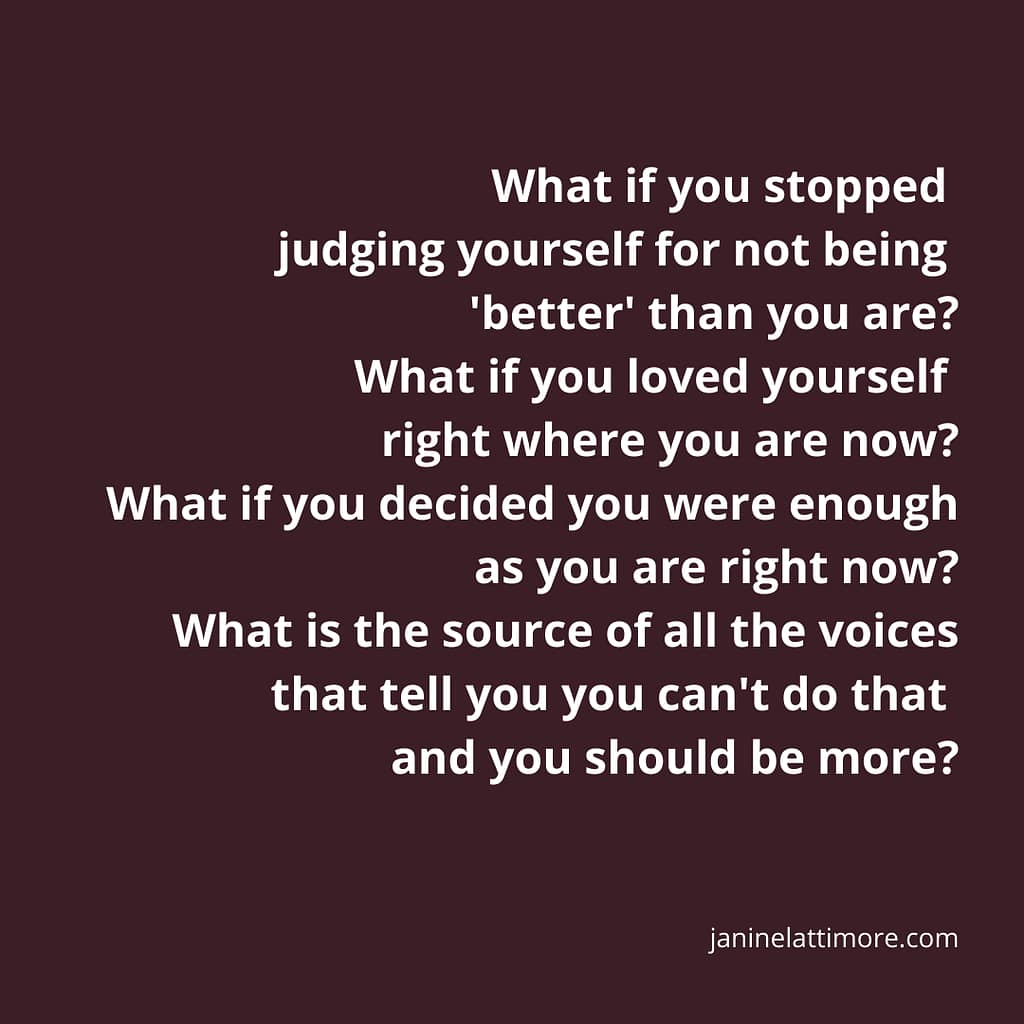
When you perceive a ‘flaw’ in yourself, instead of asking “how can I be better?”, which is based in judgement of yourself, I invite you to ask yourself, “how can I love myself more?” Judgement creates closing and resistance. Love creates openness and expansion. When you are feeling resistance around something you want to change because you judge it as wrong in some way, then you actually hold it in place. It’s like your resistance to it, your dislike of it, your guilt or shame about it – creates an energetic wall around it that keeps it from moving.
How acceptance opens the door to transformation
When you choose to accept and love an aspect of yourself that you feel uncomfortable with, it creates an energetic space that allows that aspect to naturally transform and align itself with love. I believe that in our essence we are pure positive energy. In our physical form we learn very effectively how not to love ourselves, but this is simply mental programming. When we choose to change the programme, to change what we choose to believe, and to let go of not loving ourselves, then everything naturally aligns with love and wellbeing.
Accepting something is not the same as liking it. Trying to employ false positivity to say that we like something that we don’t is dishonest and creates more disconnection within ourselves. Accepting what we see as our flaws is like forgiving someone who has hurt us. It is not saying that we like what they did or that what they did is okay, it is choosing to be in acceptance of what is, just as it is, so that we can create a space for our own healing. Sometimes, accepting the things we have done or do also involves forgiving ourselves with the understanding that we did the best that we knew how to do at the time. Choosing to be in acceptance of how things are now does not mean that they have to or will stay that way, but transformation that flows from acceptance and love is more authentic and lasting than change forced from judgement.
Accepting the aspects of ourselves that we would like to be different means that we choose not to let them be a focus for stimulating negative energy in us. It means we choose to let them be, and to focus on what we do feel good about and what we do like.
Questions to Help You Heal the Parts You Judge
When you perceive a characteristic of yourself that you feel uncomfortable about, that you feel is bad or wrong or needs fixing in some way, I invite you to reflect on the following questions:
How does this serve me?
What is it that I am trying to achieve through this behaviour?
What emotional need is this behaviour trying to meet?
What am I not accepting and loving about myself?
What is the most loving way to perceive this characteristic?
What is the most loving way to see myself?
How do I want to feel about myself moving forward?
An invitation to a new way of perceiving ourselves as more
If the accepted standard for humanity is such that nobody is perfect, and we are all broken and flawed, then maybe we need a new standard; a new guiding belief from which to evaluate ourselves. What if we choose the belief that we come into this world like a blank page and all the experiences of life, no matter what they are, create aspects of an ongoing artwork on that page; the belief that we are evolving and expanding through every experience that we have and in that we are always more, not less. If you interested, I explore and expand on these ideas in this video.
Aroha nui, much love
Janine
Feel free to comment on or share this post.
Want More?
Thank you for reading this post. If you would like weekly insights and tips from me about how to transform your people pleasing habits and have more confidence, love, respect and freedom then you can subscribe to my People Pleasing Evolution newsletter. When you subscribe be sure to check out the welcome email from me as it contains a link to my FREE ebook: How to Say No Without Feeling Guilty. This ebook It gives you practical tips to successfully overcome the three main issues for people pleasers learning to say no:
1. Knowing what words to say (sample phrases provided)
2. Confidence to say the words
3. How to manage feelings of anxiety and guilt about saying the words
Subscribe to my weekly newsletter via Substack
Learn about more of the books and resources I have created on the Resources page of my website, janinelattimore.com