
When we start talking about hormones in midlife most people think of women experiencing issues, but men, stay with me, because you experience hormone issues in midlife too. Just like the teenage years, midlife is a time of significant reproductive hormone shift for both male and female bodies. As if dealing with this transition in your forties and fifties isn’t enough though, stress frequently plays a big role in driving even more hormone havoc. The result; fatigue that won’t lift, belly fat that won’t shift, brain fog, mood swings, and disturbed sleep that doesn’t restore you. These aren’t just signs of getting older. They’re signs of a hormone system under stress, and once you understand how those two things are connected, you can begin to do something about it.
Midlife Hormone Transitions for Men and Women: What’s Happening in Your Body
Hormonal Changes for Women in Their 40’s and 50’s: More Than Just Estrogen
In midlife, female bodies transition into perimenopause and then menopause. This transition can start as early as a person’s mid-thirties or as late as their mid-fifties, but the majority of women go through the transition from their late forties to early fifties. Essentially, it is the process of the female body ceasing to produce eggs for reproduction. It is commonly known that during this time, the female body begins to produce less estrogen and progesterone, the two key female hormones. What is less well known, is that as the ovaries gradually produce less estrogen and progesterone, the adrenal glands help compensate by producing precursor building blocks that the body then converts into a weaker form of estrogen. This is very important in the link between hormones and stress which I will get to later in this article.
Hormonal Changes for Men in Their 40’s and 50’s: The Testosterone Decline Nobody Talks About
The chief male hormone is testosterone. In a male body, testosterone is at its highest level during adolescence and early adulthood. It starts to decline from about age thirty. For some men, the decline is gradual and changes aren’t very noticeable. For others, the decline accelerates in their forties and fifties and the shift is more dramatic. Many of the symptoms of male midlife hormone shifts are similar to females such as:
-
Fatigue and low energy
-
Mood swings or depression: Low testosterone can lead to changes in mood, making you more irritable, anxious, or prone to depression and “irritable male syndrome”
-
Brain fog, forgetfulness, struggling to focus: low levels of testosterone can affect the brain’s executive function and things like decision-making, focus, and memory
-
Loss of muscle mass and strength: Lifting weights feels harder, and gains are harder to maintain.
-
Weight gain, particularly around the midsection
-
Low libido and sexual dysfunction
Many of these symptoms are chalked up to being just general aging, but are actually connected to hormonal shifts or imbalances. The issues involved in a “midlife crisis” are likely to be physiological as well as psychological. Experiencing these symptoms is not “just part of aging” and is not inevitable. People in traditional cultures do not experience these symptoms of hormone change at midlife to the degree that most people in industrial cities do, so what is the difference? There are three main ones: a whole food versus a processed food diet, active versus sedentary lifestyles and levels of stress. One of the key things that impacts our hormonal health is the level of stress we manage almost every moment of the day.
How Does Stress Impact Hormone Issues in Midlife?
Does stress affect hormones in midlife? Yes — more than most people realise, and more than most doctors discuss. During the hormonal transitions of your forties and fifties, chronic stress doesn't just pile on top of what you're already dealing with. It actively depletes the raw materials your body uses to make sex hormones, suppresses the signals that trigger their production, and makes your body far less able to regulate its own stress response. The result is a feedback loop where midlife hormone shifts make you more sensitive to stress, and stress makes your hormone symptoms worse. If you're navigating midlife and wondering why everything feels harder than it should, this is the conversation you need to have.
During midlife, there is a natural decline in estrogen and progesterone in female bodies and testosterone in male bodies which can cause a number of challenging physical symptoms. Stress lowers levels of these hormones even further and makes these symptoms worse. For women, the adrenal glands, which take over producing the building blocks for estrogen, are also responsible for producing cortisol, your primary stress hormone. If your body is dealing with chronic stress, the adrenals may prioritize making cortisol at the expense of sex hormone precursors, which can worsen perimenopausal and menopausal symptoms. Over and above this, stress has a more direct impact on one of the most common symptoms of menopause transition, hot flushes. Psychological stress causes the body to release norepinephrine, which narrows the thermoneutral zone (the body’s comfort temperature range). As a result of this narrowing, even minor increases in core body temperature cause the brain to trigger a hot flash.
For men, there are three issues. Firstly, both cortisol and testosterone require the same precursor (cholesterol) to be produced. During prolonged stress, your body prioritizes immediate survival and produces cortisol at the expense of testosterone. Secondly, elevated cortisol blocks testosterone from properly binding to target cells and tissue receptors, limiting its effect in the body. Thirdly, chronic stress and systemic inflammation can upregulate the enzyme aromatase, which accelerates the conversion of testosterone into estrogen and causes further hormone imbalance.
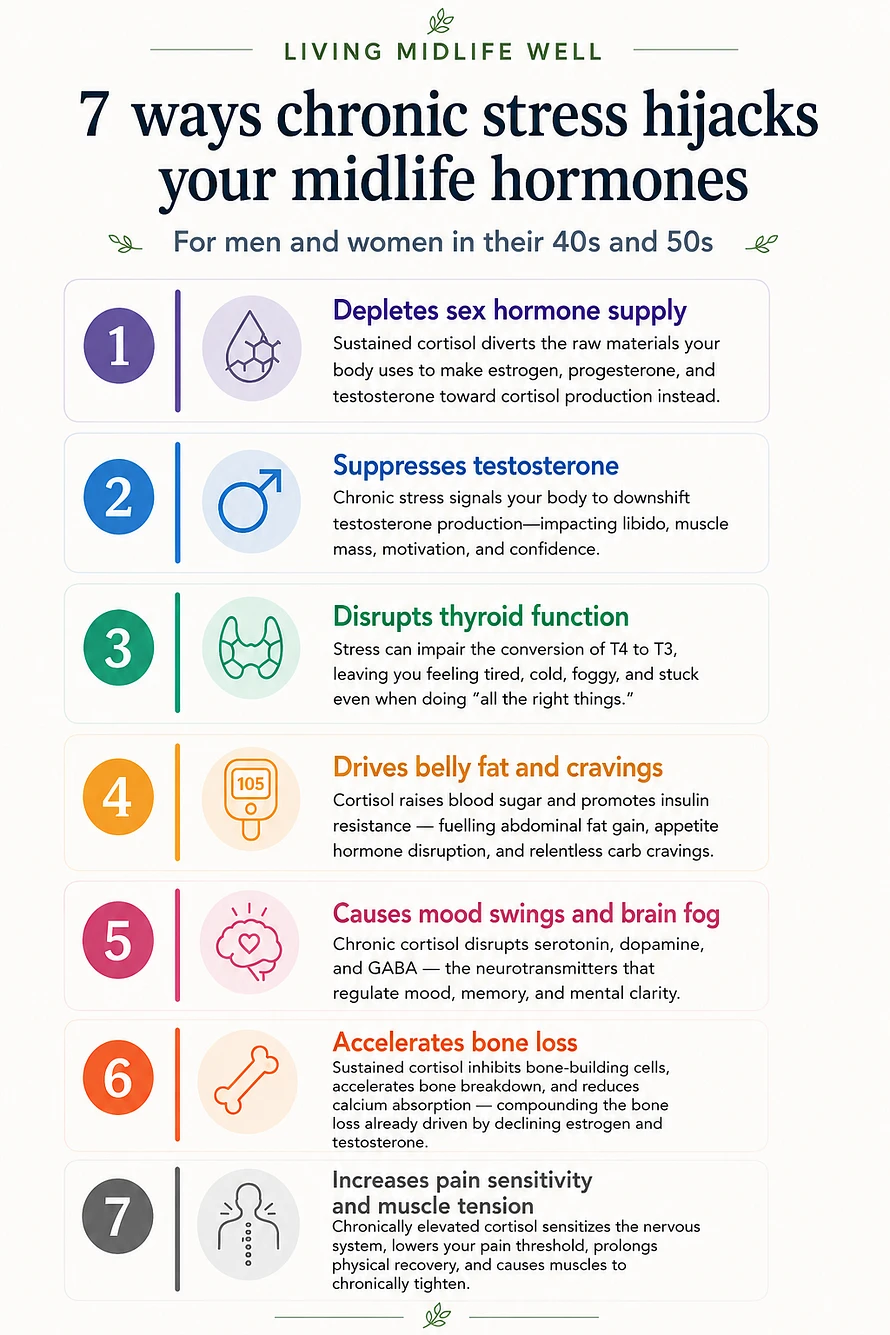
Seven Ways Chronic Stress Hijacks Your Hormones in Midlife
-
Stress depletes your body’s resources to make sex hormones - Sustained stress keeps cortisol elevated, which redirects the raw material your body uses to make estrogen, progesterone, testosterone, and thyroid hormones toward cortisol production
-
Stress reduces your body’s signaling to produce sex hormones - Elevated cortisol suppresses gonadotropin-releasing hormone (GnRH), which reduces signals for estrogen and progesterone production.
-
Stress interferes with thyroid hormone production - Elevated cortisol interferes with the conversion of T4 (the inactive thyroid hormone) to T3 (the active form), and increases reverse T3 — which blocks T3 from doing its job. This is why people under chronic stress often develop symptoms that look like hypothyroidism, such as fatigue, cold hands and feet, hair loss, and weight gain, even when standard thyroid labs come back normal.
-
Stress promotes food cravings and belly fat - Cortisol raises blood sugar, and chronic elevation can promote insulin resistance which is a precursor to diabetes and metabolic syndrome. Abdominal fat gain, changes in appetite hormones, and excessive blood sugar highs and lows are all exacerbated by chronic stress.
-
Stress promotes mood swings and brain fog - Cortisol influences neurotransmitters such as serotonin, dopamine, and GABA, which regulate mood and cognition.
-
Stress increases loss in bone density - Estrogen plays a vital role in bone remodelling, and as estrogen levels drop, the breakdown and reabsorption of bone outpaces bone formation. Testosterone is also a critical hormone for bone health in both male and female bodies. It stimulates bone-building cells and maintains bone mineral density. In male bodies, a significant portion of testosterone converts into estrogen, which is essential for preserving bone structure. In both male and female bodies, sustained high cortisol inhibits the cells that create new bone, accelerates bone breakdown, and reduces calcium absorption.
-
Stress makes you more sensitive to pain and muscle soreness - Chronically elevated cortisol sensitizes the nervous system. It lowers your pain threshold, prolongs physical recovery, and causes muscles to chronically tighten, increasing the risk of spasms and can be connected to restless leg syndrome.
Why Stress Hits Harder in Your 40s and 50s
Here is the real kicker. Not only does stress have a bigger impact on your reproductive hormones during midlife, but your body is also more sensitive to experiencing stress. During the menopausal transition, the progressive decline in circulating estrogen in female bodies compromises the regulatory mechanisms of the stress response system, leading to impaired feedback control and sustained elevation in cortisol secretion. In other words, low estrogen levels causes cortisol levels to rise. It also causes cortisol levels to be higher at night, which is the time when cortisol levels should be low. In male bodies, declining testosterone and years of accumulated lifestyle habits make their bodies react more intensely to stress and take longer to return to baseline. In addition to this, your body can get stuck in stress and hormone change loops. For example, hormone changes can disrupt sleep, poor sleep raises cortisol, higher cortisol worsens hormonal sleep issues and round and round you go.
Your Midlife Symptoms Are Not All in Your Head
Most medical doctors only assess symptoms in terms of a medical model rather than a lifestyle model. You may have had tests which came back clear because what is happening in your body is being stimulated by factors that the tests do not measure. Modern western medicine doesn’t usually look at health as a whole picture of mental, emotional, and lifestyle elements as well as physical. It also tends to look at symptoms and measures in isolation rather than in terms of body systems and systems interacting with each other. The result, if what you are experiencing doesn’t show up on a medical model, then what you are experiencing usually gets written off as “just aging” or you get dismissed as being over-sensitive.
When it comes to hormones in midlife, stress is the hidden factor that most health conversations miss entirely. Chronic stress doesn't just make you feel tense, it directly interferes with your body's ability to produce, regulate, and respond to the hormones driving your midlife symptoms. For both men and women in their forties and fifties, understanding the stress-hormone connection could be the missing piece that finally makes sense of everything you've been experiencing.
Why Healthy Habits Aren't Always Enough: The Stress Factor
Some of you reading this may be thinking, “I am living a healthy life and managing stress well, but I’m still experiencing issues so what is going on?” You may be exercising at the gym regularly, attending yin yoga twice a week, eating a low-fat diet and carrying your water bottle everywhere and still have belly fat you just can’t shift, struggle with fatigue and frequently forget why you walked into a room. I hear the frustration of that. Or, you may be on hormone replacement therapy and still feel terrible and be thinking it must not be working for you. Stress could be the missing factor for both of these experiences. We are largely taught that stress is a mental and emotional thing and most of the interventions to help reduce stress are focused on relaxing your nervous system through things like breathwork, meditation, yoga, tai chi and sound baths. These are all helpful and beneficial things, but they only address one type of stress.
What Counts as Stress? More Than You Think
Mental and emotional stress is a significant part of the stress we experience. However, there are many other ways that modern city life places stress on our bodies that most people are not aware of, but which our bodies are bombarded with and consistently trying to manage. Exposure to toxins and chemicals can put stress on your body, as can exposure to electromagnetic radiation from electricity, cell phones and wireless connections. Our bodies experience stress from being out of sync with the natural cycles of the sun and moon that it evolved in harmony with. We can also place stress on our bodies through poor or poorly timed dietary habits. Eating low fat cereal for breakfast is sold as being healthy, but in reality, does not give your body the right nutrients to build optimum and sustained energy throughout the day, and may interfere with your natural cortisol release cycle. Eating when you are rushed, upset or stressed puts additional stress on your body because your digestive system shuts down when you are in those states. Excessive exercise puts stress on the body, especially when you “go hard” without fueling your body well first. Whenever your body perceives that inadequate fuel is available, it triggers a survival response and raises cortisol. If you are exhausted, then your body will be experiencing stress. As if all of that isn’t enough, in addition to the present stress your body is experiencing, emotional and physical stress are also cumulative. This means that weighing into your stress load by the time you reach your forties, are the decades of oxidative stress, inflammation and metabolic chaos that have been occurring in your body over time. All this cumulative wear and tear on your body and brain caused by prolonged, repeated, or chronic stress is called your “allostatic load”.
While wellbeing practices such as meditation, yoga and breathwork are important and I am an active proponent of teaching them - if they are just an add on to a life that is full of other forms of stress, then the impact will be reduced. To effectively manage stress, you need to look at the way you are living your life as a whole.
Not All Stress Is Bad: Understanding Acute vs Chronic Stress
At this point I want to note that not all stress is harmful. Acute stress, which is short term bouts of stress, can help you to manage challenges. The human body is wonderfully designed and the stress response developed as helpful to our survival. Moderate and short-term physical stress, like going for a hike, can help regulate inflammation and is necessary to build muscle and bone mass. Stress hormones are designed to do a short-term job and then be flushed from our system and when that happens, they are beneficial. The problems and damage occur when they remain circulating and active in the body for extended periods of time, or when they are produced in higher levels than the body can effectively utilize.
Where to Start: Small Steps to Reduce Your Stress-Hormone Load
If reading all that caused you to feel stressed or overwhelmed and think “there is too much to fix, what’s the point”, then I understand. However, I am a great believer in being able to eat an elephant one bite at a time - metaphorically of course - the elephant is my new adopted spirit animal. A full life overhaul is a long-term project that we can journey on together over time. For now, start with one thing, a small thing, a micro commitment to yourself that you can maintain. In the game of wellbeing, slow and steady wins the race - maybe the tortoise could be my second spirit animal. For today, you can begin here with the following list of shifts. These are simple things that you can do straight away to support your adrenal glands and your body’s hormonal balance.
-
Take Regular Wellbeing Pauses: these may not be everything, but they are still important and a good starting point because they build your capacity to make other changes. This includes things like slow deep breathing, gentle movement, looking up at the sky, yin yoga, tai chi and qigong. I have put together an Essential 5-Minute Stress Reset Toolkit with a number of quick and easy relaxation practices in it which you can get for free when you subscribe to my Weekly Wellbeing newsletter.
-
Eat for Balance: Prioritize whole foods, lean proteins, healthy fats, and plenty of vegetables. Reduce processed foods, sugar, and alcohol, which can disrupt hormone balance.
-
Prioritize Sleep: Establish consistent, relaxing bedtime routines. Try and keep your phone out of your bedroom and avoid looking at it after 9pm.
-
Reduce Inflammation: Limit alcohol, caffeine, refined sugar and processed foods, which can tax adrenal function.
-
Move Your Body: Be as active as you can through the day. Avoid sitting for longer than 45 minutes at a time without at least standing up. Engage in moderate resistance training and walk as often as you can as much as you can. Walking is one of the best forms of movement for people in midlife.
As a personal case study note, I have been practicing all of the things on this list as part of my regular lifestyle for at least the last ten years and I have had very few issues with my menopause transition apart from erratic periods and ongoing bleeding as my menses stopped, and mild hot flushes.
While I cannot draw a direct scientific cause and effect connection that this works to minimise midlife hormonal issues, because genetic factors are also involved, my experience does provide some research evidence that this is very beneficial.
Just One thing
My “Just One Thing” action point for you this week is to do just one thing from the list of suggestions above.
If you want to take this a step further then write down what you are going to do in the comments. This helps to lock in your commitment to yourself, creates a level of accountability and may help inspire someone else.
I will start us off. My “just one thing” commitment is not from the list, but is connected to a cause of stress that I have mentioned. It is to take a break, sit down, relax and eat all my meals mindfully without actively multi-tasking or working while I eat. I frequently work on my laptop while I am eating which I know is not good for my digestive system and keeps me in an activated “must be productive” mild stress state.
I look forward to reading your comments and hearing what is important to you.
Aroha nui, much love
Janine