Video thumbnail background
Video thumbnail
19:50
Join to access
Image

Weekly Wellbeing Newsletter

Do You Love Them or Hate Them?

This week we are giving some much needed attention to a part of the body that is often overlooked, and which most people either love or hate. Yet this part of your body supports you every day, and is directly connected to every other part of your body. It’s your feet. Some people have a foot fetish and love a foot massage, other people think they are ugly and stinky and freak out at the thought of having them touched. In this newsletter, I want to open you to a whole new perspective of the value of your feet.

Did You Know?

You may know that the nerves in your feet connect to the rest of your body, but did you know that your connective tissue, your fascia, does too. A simple way to understand your fascia is to think of it like a skin wetsuit. If you pull the wetsuit tight around your feet, then it will pull the rest of the suit tight and down. This tightness can limit ankle mobility, shift your centre of gravity, cause pain in the calves, knees, hips, and lower back and lead to restricted flow of blood and lymph. It can even draw down the skin on your face and contribute to the signs of aging.

Feet and Moving Forward on Your Life Path

Psychologically and spiritually your feet are symbolic of your ability to move forward and have direction in life. This links to the topic of my article and podcast for this week, which is how to find your true life purpose (see the links below to learn more). In Yogic traditions the feet represent security and being grounded.

When you experience pain or issues in your feet, it could be a sign to slow down and evaluate the life direction you are moving in. Good questions to reflect on are:

Do I feel safe?

Do I feel supported?

Am I ready to take this step in life?

Are Your Feet Red or White?

That might sound like a strange question, but the colour of your feet may indicate emotional issues that you are experiencing. Redness in the feet or toes can indicate pent-up frustration or anger or feeling curbed in life. Pale or white feet can indicate extreme fatigue or “giving up”. If your feet feel heavy, then it can indicate that your nervous system is overwhelmed and energy is pooling in your lower extremities to help the body ground itself. Stiffness, tension and pain in your feet can indicate a subconscious desire to flee something in life, or a reluctance to step forward in life.

This Week's Practices

Go Shoe Free Daily

An easy way to care for your feet is to walk barefoot (or in socks) for at least five minutes a day. This exercises your feet and helps to connect you with the earth and ground you. You can heighten the effect of this by walking barefoot on grass, sand or earth. This connects you directly with the energy of the earth which can restore the electrical balance in your body by allowing the body to absorb electrons from the earth. Grounding your feet in this way can help shift your nervous system into a resting state and may reduce inflammation and improve sleep.

5-Minute Stress Reset

When you are feeling stressed, anxious or overwhelmed, or are overthinking, try this. Place your feet flat on the floor and then let your awareness travel down your body to your feet and the connection of your feet to the earth. This brings your energy down from your head to your feet, and can help slow a swirling brain and give you a moment of presence. Doing this for a few minutes can be enough to create space for clarity in your thinking and reset your nervous system.

If you would like access to this week's twenty minute guided practice video on how to effectively release your feet and ground yourself, then you can join the Living Midlife Well membership community for only $7US per month. Click the link below to learn more

Let's Connect

Your feedback helps me to serve you in ways that are valuable to you. This week I would love to know if you practice grounding and if so how you do that.

You can reply by email to support@janinlattimore.com

A quote for the week...

“The purpose of life is to live it, to taste experience to the utmost, to reach out eagerly and without fear for newer and richer experience.”
― Eleanor Roosevelt

Weekly Article: What Is My Life Purpose? A Midlife Guide to Living True to Yourself

Your passion is your purpose. To find yours, answer the $10 million question.

In this week's article and podcast I'm challenging the idea that purpose has to look like service or sacrifice, and making the case that following your bliss is not only good for you, it's the most powerful thing you can do for the people around you.

If you're in your 40s or 50s and that restless, reaching feeling has been showing up lately, this episode will give you a framework for understanding what it's telling you, and three practical questions to help you answer it.

Listen to the Podcast Version

What's New?

Looking for a writing journal to reflect on how to find your life purpose and live your bliss? I just added this design to the Living Midlife Well shop

Sign Up to the Weekly Wellbeing Newsletter

Click the link below to subscribe to get my Weekly Wellbeing Newlsetter delivered to you every weekend with one focus, idea, practice, or insight to help you live your week with a little more ease and a little less stress. Plus! Get the 5-Minute Stress Reset Guide for FREE! 

Yes, I want to know more wellbeing tips

Aroha nui, much love
Janine

Janine Lattimore | Living Midlife Well | janinelattimore.com

Image

One of the top five regrets of the dying is this: "I wish I'd had the courage to live a life true to myself."* If that sentence lands with you, then now is the time to ask yourself, “What do I really want?” Midlife is the perfect moment to stop living by other people's blueprints and start asking what genuinely fires you up. Here's how to discover your true life purpose. and why your passion and your purpose are the same thing.

Why Midlife Is the Perfect Time to Question Your Purpose

Midlife is a time of significant transition and change in our relationships, our work, our family structures, and our bodies. As we reach the midpoint of our life with several decades of experience behind us and our mortality looming closer on the horizon, we can begin to question our purpose and desires. We may realise that what we have lived up to this point was largely a response to people and forces outside of us, and recognise that either we don’t know who we really are now, or that we are not living in alignment with who we really are.

In their youth and early adulthood most people take on what society dictates to be the purpose of life which revolves around getting a good education, a good job, developing a happy long term relationship and being a good person. At midlife, we may have ticked all those boxes and are now looking for more, or be realising that those purposes were not true to us. This can lead to a deep questioning of what our purpose is and what we really want which can be part of what is referred to as a midlife crisis, but which we can reframe as a midlife edit. That restless, reaching feeling in midlife isn’t a malfunction. It’s your authentic self asking to be seen.

Or maybe you are the opposite. Maybe you feel done with striving and are asking yourself whether you need a sense of purpose, or should you just sit back and enjoy life? What if enjoying your life is your purpose?

What Does Life Purpose Actually Mean?

We tend to view life purpose as being connected to some form of service to others or promoting a higher good. In that it is often seen as self-less. I want to propose something radical. I want to put self right at the centre of purpose and say that your purpose here in this physical experience is to be you. You are unique. Even if you have an identical twin there is no one completely like you who can bring your mix of qualities, experience and insight to the world. This is captured beautifully in one of my favourite quotes

“There is a vitality, a life force, an energy, a quickening that is translated through you into action, and because there is only one of you in all of time, this expression is unique. And if you block it, it will never exist through any other medium and it will be lost. The world will not have it.” - Martha Graham

If you have been playing roles like wife, mother, father, husband or whatever your job title is for so long that you are not sure who your authentic self is without those hats, then start here with asking yourself “what lights me up inside?”

Your Passion Is Your Purpose — Here's Why

Your purpose in life is to do what lights you up. Your passion is your purpose. I believe that is what you are here for, and I also believe that is the best way you can serve others. Following your bliss and serving others are often viewed as being separate, even opposing things, as being self-centred versus being self-less. Service is often equated with self-sacrifice, and self-sacrifice is often seen as necessary in order to help others. This is a belief not a fact. It is one point of view that has been perpetuated by many. I think it is very important to look at HOW we are serving others and to open our definition of what service is. Instead of using the word service, let’s use the word uplift. What most people desire is not just to help other people, but to uplift them, so that they can feel better and be happier.

Why Following Your Bliss is the Best Way to Serve Others

If you would like to help other people to feel better and happier, then the best way to do that is to be experiencing a lot of joy for yourself. You radiate what you are feeling and the people around you receive that. Following your bliss is the best way to uplift others. Bliss and service are not separate, they are closely intertwined.

Your bliss serves others.

Your passion is your purpose.

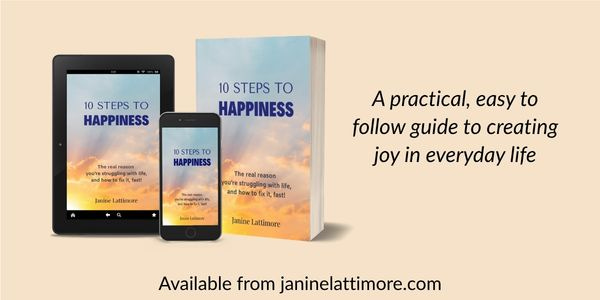
We cannot be self-less and why would you want to be? You are here as a one-of-a-kind creation to live your unique life. No one else will ever exist like you and no one will ever be able to live the life that you are living now. I believe that is a divine gift. Many people go looking for their purpose in serving others in some way. I’m not saying that is not worthwhile, however, I would argue that your joy is your purpose. When you are lit up, you shine light into the world. So do what lights you up, whatever that may be. (extract from my book 10 Steps to Happiness)

When you do what lights you up, when you do what you love, what you’re passionate about, what gives you energy and what makes you glow, then that shines a light for others and brings more light into the world. Sometimes people think that our purpose needs to be an obvious act of service to others and I believe that is a good thing. If you feel that it is your passion and your calling to do that, then that’s wonderful. If that lights you up, then that is your purpose, but I don’t think that it has to be for everyone. Some people believe that if we are not serving others with our lives in a really obvious way that we’re not making a difference in the world. I don’t believe that’s true. I think we make a difference in the world when we shine as who we are.

Three Powerful Questions to Discover What Lights You Up

If your purpose is to follow your bliss, your true desire, the next question of course is how to identify that. I think that it is important to note that your passion or bliss doesn’t have to be big. It doesn’t have to be some grand goal. Your bliss may be growing a garden full of flowers, or reading good books. It may be volunteering at a food bank or fostering rescued animals. One of the best ways to identify what lights you up is to play with curiosity. Try new things, meet new people, take on new projects, participate in local groups, or explore a new hobby. Moving out of routine and auto-pilot shakes up your energy and gives you a different perspective. Embrace discovery, imperfection and learning. You don’t have to be the best at something to enjoy it. When it comes to bliss, the process of engagement is what matters, not the outcome. The key is how you feel while you are doing it.

It may help to begin by reflecting on your responses to the following three questions. I recommend you take some time with this. Let them sit with you as you move through life for a week or two.

  • What did you enjoy doing as a child?

  • If you received $10 million today and didn’t have to work to financially support yourself, what would your ideal day look like??

  • When do you feel most authentic, connected, and at peace with yourself?

For most people what will begin to form is a list of things you love doing, ways you like to be creative, experiences of interacting with other people and/or environments you appreciate. You can use this list to guide you in creating a life filled with more of your bliss and purpose, and, if you want to, you can refine this even further.

How to Go Deeper: Finding the Feeling Behind Your Passion

Usually when we think of something that we love and appreciate, or desire, we think of it in terms of a condition. By that, I mean some sort of physical circumstance, event, person or action. However, at its essence bliss is a feeling, not a condition, and it is more than one feeling and slightly different feelings for different people. When we attach the feeling of bliss to certain conditions, then we are attaching it to something external to ourselves that we don’t have full control over. By identifying what bliss feels like for you, then you open yourself to the unlimited ways that you can feel that, rather than having it connected to only one condition which may or may not happen.

For example, I love to dance. We could say that dance is one of my passions because it lights me up. However, it is not dance that lights me up. What lights me up is what I feel when I dance. I don’t feel it every time I dance. The condition, in this case dance, is not what creates the feeling. I create the feeling, or rather, I release the feeling because it is always in me. The feelings that light me up in connection to dance are freedom, connection and sensuality. When I focus on how I can feel that in any way rather than just through dance, then I create the opportunity to experience it every day without boundaries.

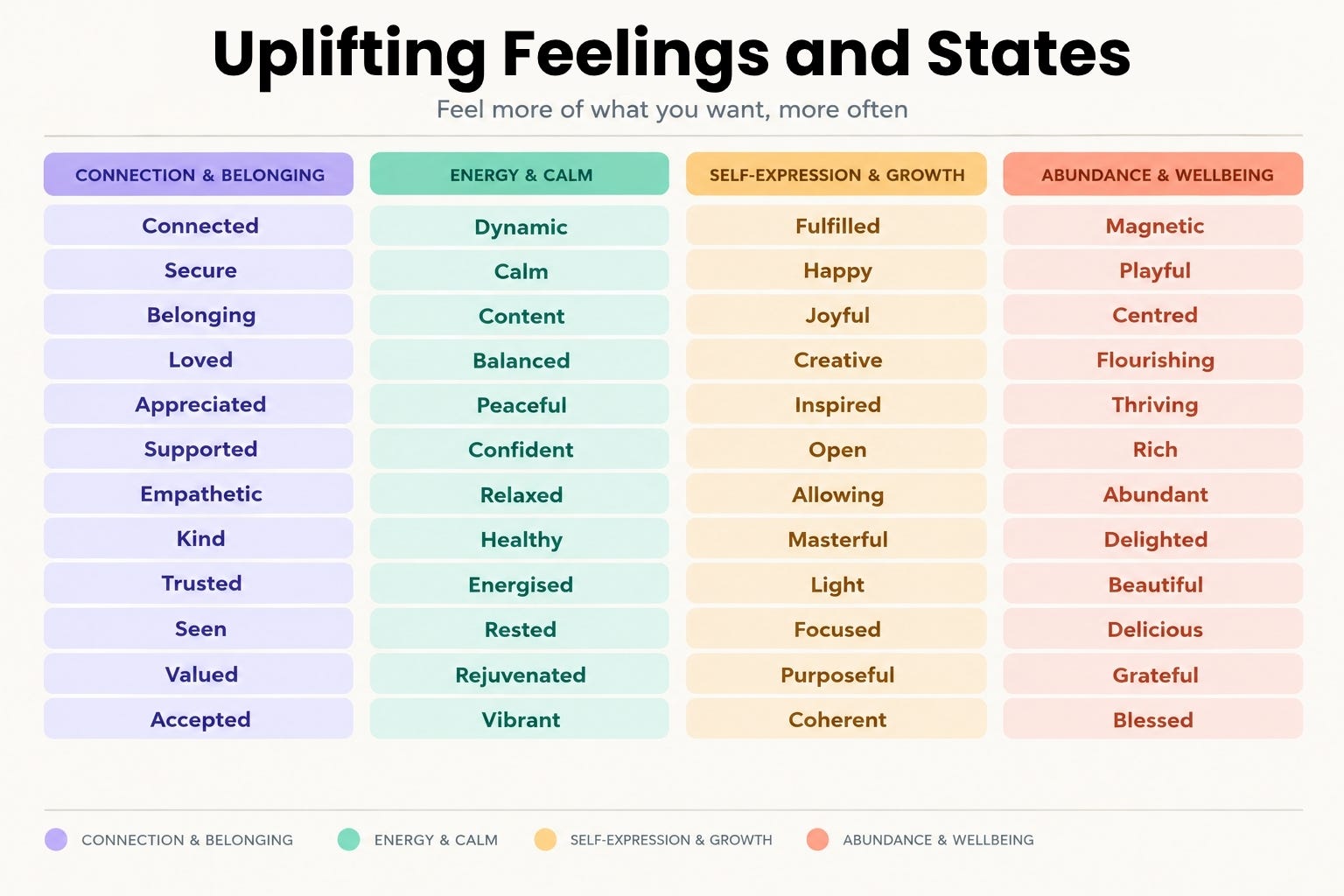
What do you feel when you engage with something that lights you up? It may be strength, or creativity, or peace, or release. It may be helpful to know that there is often a close connection between qualities that you value and what fires you up inside. For example, freedom is one of my highest values.

Two Questions to Ask Yourself Every Day

Once you have identified the feelings at the core of your bliss, then you can begin asking two empowering questions:

  • How can I experience the feeling of my bliss today?
  • How can I feel lit up?

Your Unique Light Is Your Gift to the World

The core question here is, what is the full expression of you that brings your light into the world? How are you going to allow your unique amazing light to shine today because the light that is inside of you, the light that is you, is precious. Only you can shine that light. Nobody else can. That is your gift to give. That is your purpose and connecting to that will allow wonderful experiences of contentment and happiness to unfold for you as you embark on the second half of your life.

Why wouldn’t you sing your sweetest song today? Now?

Amanda - A Little More Joy

Just One Thing: Your Action Step

The Just One Thing action point for this article is to identify how you can bring one more element of your bliss into your life now, and then diary it in.

For example, as I was writing this and reflecting on the question of what would my ideal day look if I was financially secure, what came up for me is that I would have a garden studio and spend part of every day painting or engaging in craft projects. To bring an element of that into my life now, I have decided to set aside one evening a week to paint or craft.

If you’re like me and tend to let other “work that needs to be done” over-ride your bliss intentions, then it can help to make yourself accountable to other people in some way. This may be getting your family on board with the idea, setting a regular time to do the activity with a friend, or joining a group or class.

You can also lock it in by sharing it in the comments, and what you share may also give other people ideas or inspiration. Let me know, what is your bliss, what is your light to shine, and how are you going to live it more?

Aroha nui, much love
Janine

Image

I see breath as the key foundations of wellbeing. It is often overlooked though because we all do it every day to stay alive and therefore we must be doing it right. Right? Not quite. Breathing incorrectly can harm your energy levels, mental function and many other aspects of your health. Conversely, breathing correctly can boost your energy and mental function and create balance and wellbeing in your body. Breathing correctly also helps to calm you and reduce the impact of stress.

How to Breathe Correctly

There are two essential elements to breathing correctly: breathing through your nose (nasal breathing) and breathing actively with your diaphragm (diaphragmatic breathing).

Nose Breathing

If we look at the effects of mouth breathing vs the effects of nose breathing there are not pros and cons of each as far as I am aware. Mouth breathing is the cons and nose breathing is the pros.

Issues connected to mouth breathing:

· Sleep apnea

· Sleep disturbance

· Snoring

· Anxiety

· Dental issues

· Dry mouth

· Bad breath

· High blood pressure

· Brain fog and reduced cognitive function

· Reduced circulation and reduced blood flow to the brain

· Can easily lead to over-breathing which can cause adrenaline and blood sugar to spike. Consistently over-breathing strains the body just like consistent stress does.

The Benefits of Breathing through Your Nose

· High energy levels

· Balanced blood pressure

· Healthy heart rate variability (meaning your body has a high level of stress resilience)

· Lower levels of stress and anxiety

· Healthier teeth and gums

· Encourages effective jaw and airway development

· Healthy lung function

When you breathe through your nose, your sinuses slow down the air, filter it, warm it and pressurize it which makes it easier for the lungs to process it. Nose breathing also releases about 6 x more nitric oxide than mouth breathing. This is a key health point, because increased nitric oxide has numerous health benefits.

· improves blood flow and oxygen supply

· enhances blood flow to the brain

· is key for arousal and erections in men and women

· helps regulate immune responses

· improves lung function

· improves muscle performance and recovery

· fights inflammation

· supports bone health

From all that it is clear that our bodies are biologically designed to nasal breathe. That is our natural and optimum way of breathing. Remember, optimising your health does not have to be complex or involve doing more things.

The how to for nose breathing is pretty simple: close your mouth and breathe in and out through your nose. Try and keep your mouth closed and breathe through your nose at all times including when eating, exercising and sleeping.

Diaphragmatic Breathing

Your diaphragm is a large, upward dome-shaped muscle that extends across your torso under your lungs and separates your chest from your abdomen. It acts as the primary muscle for breathing by contracting and flattening creating a vacuum in the lungs to pull air in (inhalation) and relaxing back into its dome shape to decrease the space inside the lungs and force air out (exhalation). Practicing diaphragmatic breathing strengthens core muscles, stabilizes the spine, naturally encourages better postural alignment, reduces neck and shoulder tension and promotes a relaxed, upright stance. It is very difficult to breathe deep into your lower ribs when you are bent or collapsed forward.

How to do Diaphragmatic Breathing

Either stand, or lie on your back with your knees bent and feet flat on the floor. When you are starting out with practicing diaphragmatic breathing, it is easiest to feel the movement of your diaphragm and ribs when you are lying on your back. Avoid sitting down to do this practice because sitting compresses your abdomen and restricts the free movement of your diaphragm. Breathe into your diaphragm. When you inhale, notice your diaphragm contract downwards and your mid-ribcage gently expand out to the sides, back and front. The movement is small and gentle. You are allowing the movement of your diaphragm and ribcage - not forcing it. When you exhale, notice your diaphragm releasing back up and your ribcage dropping back into rest. You may like to place one or both hands on your mid to lower ribs to feel the movement of them and to draw your awareness to this area of your body.

Diaphragmatic breathing is often described as belly breathing and people are advised to place a hand on their abdomen to feel the rise and fall of their breath coming in and out.  Breathing down into your belly can cause some issues.  It can put pressure on your pelvic floor, and at middle age, many people have pelvic floor weakness or issues and need to avoid putting stress on it.  It can also cause you to flare your lower ribs out rather than the ribs expanding evenly.  This can create tension in your neck and a forward head posture.

To watch a video where I demonstrate how to diaphragmatic breathe click here.

Takeaway Focus and Practice

Invest 5 minutes a day in consciously breathing through your nose while actively using your diaphragm (i.e. practicing nasal and diaphragmatic breathing). This will begin to train your awareness and muscle memory. It will also act as an effective micro-break allowing your mind to settle and your body to switch out of stress mode (your sympathetic nervous system) and into rest mode (your parasympathetic nervous system).

Want More Quick and Easy Wellbeing Tips?

Click the link below to subscribe to get my Weekly Wellbeing Newlsetter delivered to you every weekend with one focus, idea, practice, or insight to help you live your week with a little more ease and a little less stress. Plus! Get the 5-Minute Stress Reset Guide for FREE! 

Yes, I want to know more wellbeing tips

Image

Begin with your breath.

Breathing is foundational.

Breathing well brings balance

Mentally

Emotionally

Physically

Spiritually.

In most spiritual belief systems our breath is connected to our lifeforce or soul.

Breathwork doesn’t need to be complicated to be effective. While intensive guided breathwork sessions can have amazing benefits, simple daily practices can also create balance and healing.

Here are three steps you can work though to enhance the way you breathe. This will improve your energy levels, mental function, memory, blood circulation and stress resilience.

Step 1. Breathe Through Your Nose

Start with this and this alone can make a big impact. Nose breathing is connected to benefits such as high energy levels, balanced blood pressure, stress resilience and lower levels of stress and anxiety. When you breathe through your nose, your sinuses slow down the air, filter it, warm it and pressurize it which makes it easier for the lungs to process it. Nose breathing also releases about 6 x more nitric oxide than mouth breathing. This is a key health point, because increased nitric oxide has numerous health benefits.

Step 2. Extend Your Exhale

When you want to feel calmer and more balanced breathe in through your nose and then exhale long and slow through your nose or mouth. A long exhale calms your nervous system by activating the vagus nerve. It also signals your heart to slow down and interrupts the stress loop by sending a signal of safety to the brain.

Step 3. Incorporate Pause

Most people over-breathe, especially if they breathe through their mouth a lot. It is common to think that because oxygen gives us energy then the more oxygen we take in the better, but this is not true. Your body is a finely balanced system of systems. What we really want is good oxygen utilisation in the body and breath practices which include breath pausing or holding help to develop that. They can also strengthen your diaphragm. A strong, well-functioning diaphragm improves breathing efficiency, stabilises your core and regulates your nervous system.

A Practice to Put it All Together - The 4,7,8 Breath

The 4, 7, 8 breath is an easy practice that you can do anytime to give your brain, body and nervous system and quick reset. Simply bring your awareness to your breath. Notice how you are breathing for a few moments. Then, inhale through your nose for the count of 4, pause your breath for the count of 7, and exhale slowly through your mouth with a sighing breath for the count of 8. Repeat the 4, 7, 8 sequence 3 times. Notice how you feel now.

Remember:

These practices may be new to you, or some may be reminders.

Reminders are helpful too.

They may seem too easy. We get programmed that things need to be

hard or complicated to be good.

Easy can be good too.

If you want to gain some more understanding about how stress effects you and what is needed to completely rest, then you can read my article or listen to my podcast for this week (see the links below)

For access to the longer guided video version of this week's practice, you can join the Living Midlife Well Silver Member Community.

Learn more about the LMW Member Community


Let's Connect

Your feedback helps me to serve you in ways that are valuable to you. This week I would love to know if you have practiced nose breathing, extended exhales or breath pausing before or if it is new to you, and what have you experienced when focusing on your breathing in this way?

You can reply by email to support@janinlattimore.com


A quote for the week...

When you rest, you catch your breath and it holds you up, like water wings…” — Anne Lamott


Weekly Article: The 3 Types of Midlife Exhaustion (and the 3 Elements of Rest That Actually Help)

My article this week was about the three key ways that stress affects us in midlife and the three elements of complete rest.

Read the article


Listen to the Podcast Version

  • ​On Youtube​
  • Or search Janine Lattimore Living Midlife Well on Spotify and Apple Podcasts


Remember:

Simple can be effective.

You don't need to know everything. You just need to know and do the things that are important to you. One simple thing practiced daily is enough.

That's how effective change happens.


Sign Up to the Weekly Wellbeing Newsletter

Click the link below to subscribe to get my Weekly Wellbeing Newlsetter delivered to you every weekend with one focus, idea, practice, or insight to help you live your week with a little more ease and a little less stress. Plus! Get the 5-Minute Stress Reset Guide for FREE! 

Yes, I want to know more wellbeing tips


Video thumbnail background
Video thumbnail
19:43
Join to access
Image

We live in a culture that has a very complicated relationship with the word busy. On one hand, we wear it like a badge of honour where being busy signals that we’re important, productive and needed. On the other hand, the wellness world has spent the last decade telling us that busy is basically a modern disease and that we need to slow down, pause and be present.

I think both of those perspectives are missing something crucial.

In my experience the problem is not really busyness. Most people who are exhausted, overwhelmed and depleted are not struggling because their lives are too full, they’re struggling because their lives are full of the wrong things.

There’s a profound difference between a life that is full and a life that is overloaded, and that difference has less to do with how much you’re doing and more to do with whether what you’re doing is in alignment with what truly matters to you.

The framing of “busy” in modern Western culture is interesting. In many areas of society being busy is seen as admirable. It can almost be elevated to a virtue when it is seen as the opposite of being lazy. Busy is often associated with being productive and working hard. On the flip side of this, we have the modern personal development movement which emphasizes pause and presence, and has almost demonized being busy.

The Two Faces of Busy

I think that the concept of “busy” has two sides, and when I Googled the definition of the word “busy” this was highlighted as the meaning was either being actively engaged, or crowded with activity. On one side we have the definition of busy as having too much to do and habitually overworking, and on the other side we have the concept of busy as being actively engaged in doing something. So, what makes the difference? What determines whether you are busy in a state of overwork and overwhelm, or busy in a state of engagement and aliveness?

The difference, is whether or not what you are doing is in alignment with what is truly important to you.

If you are busy and unhappy, overwhelmed, stressed and exhausted then the problem is probably not that you are busy, the problem is that you are unfulfilled.

It is not a stuff problem; it is an alignment problem.

Doing lots of stuff + unbalanced, unaligned energy > stress, overwhelm, exhaustion

Doing lots of stuff + balanced, aligned energy > a rich and fulfilling life

I don’t think that being busy in and of itself is a problem. Being busy and being stressed do not always go together. I am usually busy, but I phrase it in other ways because most of the time I am living intentionally in alignment with my highest self. The words I use instead are to say that my life is full or rich.

The paramount issue is what is the energy engine underneath your work? What is driving you? Is it performing, trying to prove something, or fear of missing out, losing out or being rejected? Or is it purposeful and creative engagement with life?

What does it actually mean to be in alignment?

The idea of being in alignment with your authentic self, in other words having aligned energy, gets talked about a lot in personal development teachings, especially those with a spiritual aspect to them, but what does that actually mean. Alignment involves knowing and living your values, purpose and higher-self desires. Higher-self desires are those that are connected to your soul rather than your ego. Ego desires are to do with how you appear; the image you portray. They are driven by urgency and doing things for other people, and are about performance, competition and earning. Soul desires come from your inner knowing and feel open and expansive. Other terms for your higher-self desires are your passion or bliss. They are what you would do even if you didn’t get paid. It’s the person you love being and the things you love doing when no one is watching.
Does living in alignment mean you just do what you want?

I want to clarify that living in alignment with yourself does not mean that you only do things that you want to do, although I do invite you to notice any beliefs you have about not being allowed to do what you want. We grow up with a lot of unexamined adopted beliefs about this that can limit how much we allow ourselves to have (if you want to learn more about how to identify and shift your limiting beliefs then there is a chapter on that in my book 10 Steps to Happiness). Life also has responsibilities and curveballs for us to navigate. Alignment is not just about desire and preference; it is also about the perspective that we have when approaching all of life. Having a life philosophy that enables you to release resistance to challenge, and to flow with all aspects of life experience enables you to be in alignment within almost any circumstance.

This doesn’t mean that you just passively accept everything that life throws at you. Being in alignment with yourself also gives you clarity about where and how to create meaningful boundaries for yourself. For me it comes back to the idea that is expressed well in the Christian Serenity Prayer by theologian Reinhold Niebuhr. Here is a simple non-religious form of that:

Stay calm about the things you can’t control.

Have the courage to change the things you can.

and be wise enough to know the difference.

Sometimes alignment comes through what you choose to do, and sometimes it comes by how you frame your perspective of what you are required to do. Wisdom, which is also a form of alignment, guides you to know when to flow in acceptance, and when to actively create what you want.
Invest time to know yourself

When I run after what I think I want, my days are a furnace of distress and anxiety;

If I sit in my own place of patience, what I need flows to me, and without any pain.

From this I understand that what I want also wants me, is looking for me and attracting me.

There is a great secret in this for anyone who can grasp it.

— Rumi

One surefire way to live an unfulfilled life is to be constantly in a rush reacting to life. The key to fulfillment, is to give yourself time and space to become clear on what your values, purpose and highest desires are. Clear energy of thought, emotion and action that is in alignment with your soul is powerful and attractive.

Three questions that reveal your authentic self

Here are three questions that will help you to come to know the key aspects of your authentic self:

  1. What are your top 10 values?

    Think about experiences you have had where you have felt high levels of joy, pride, or frustration. Things that give you a lot of joy or pride are connected directly to your values. Conditions that make you feel angry or frustrated indicate what your important boundaries are, in other words, what values have been denied or disrespected.


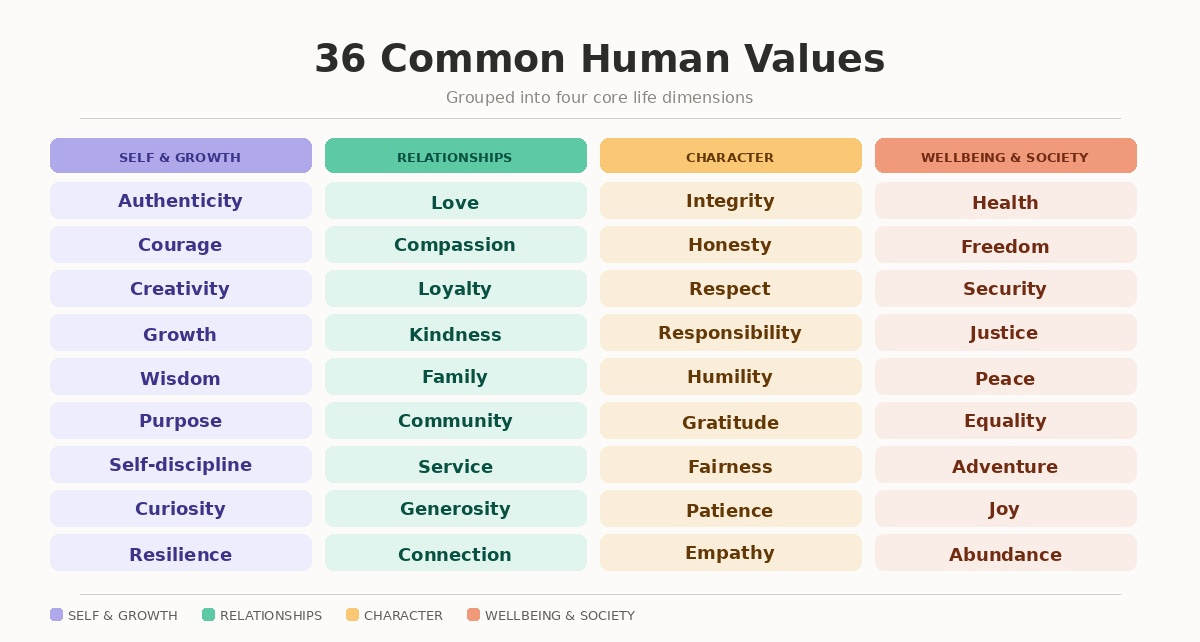
    Below is a list of 36 common values that may help you to identify your own.

  2. What are your top 10 innate gifts and practiced strengths?

    Fulfillment happens when you are moving in your strengths. This is not to say that challenge and learning are not purposeful too, but we feel our best when we are living from our strengths. What do you do that feels easy or which you do well without a great deal of effort? What skills or characteristics do other people thank or compliment you for? What do you enjoy doing?


    That last question is the most important because doing what you love and what lights you up is your purpose. Your passion is your purpose. What you love is your life force being expressed through you.


  3. How do you like to be creative?

    Creativity is also the expression of our lifeforce and it is not just about making art. Creativity can be expressed in many ways such as ideas, variation, movement, problem solving, gardening, cooking, exploring and playing.

Coming to know these aspects of yourself will help you to identify what is truly important to you, which is the aligned energy half of the equation of living a fulfilling life. The other half is having balanced energy.

What is balanced energy?

There are two aspects to having balanced energy, and balance is as important as alignment. The two aspects are capacity and creativity. Capacity means how resourced are you to do what you are doing. You can have a lot of capacity and be working from a place of unaligned energy and you will probably still be okay. Conversely, if you are living in alignment with your authentic self but work beyond your physical, mental or emotional capacity then you will experience stress and exhaustion.

The second factor that needs to be balanced is creativity. You can be operating in alignment with your values and strengths and still stagnate and become unfulfilled if you are doing the same things day after day. Stagnation is the opposite of creation and occurs when there is an absence of movement and new energy. When you suppress or do not allow space for your creativity, then you begin to stagnate and stop growing, progressing, and developing. Creativity allows energy to move within you and around you and nourishes your mind and body.

Balanced aligned energy is where you are well resourced physically, mentally and emotionally, and creatively expressing your values, strengths and desires. Different people need different levels of resources at different times, and need to live with different levels of creatively to feel satisfied. Maybe the real question is,

“What allows your life force to flow most abundantly?”

The recipe for a rich and fulfilling life

Busyness itself is not the enemy. When what you are doing reflects your authentic values, strengths, and deeper desires, then a full and active life becomes a source of energy rather than a drain on it. The key is investing time in genuinely knowing yourself: what you value, where your gifts lie, and how your creativity wants to be expressed. Pair that self-knowledge with keeping your energy balanced in terms of personal capacity and creative variety, and busyness transforms from overwhelm into aliveness. The issue isn’t how much you are doing, but how much of what you are doing is meaningful to you.

Just One Thing

This week’s “Just One Thing” action point to help you turn information into transformation through implementation is to reflect on and record responses for the top three questions that reveal your authentic self:

  1. What are your top 10 values?

  2. What are your top 10 innate gifts and practiced strengths?

  3. How do you like to be creative?

If you want to take this to the next level, you can get my ebook Mastering Change which includes a reflection journal. This will guide you to deeper clarity about what is truly driving your current thoughts, feelings and actions, and to identify meaningful change and give you the keys to successfully transform yourself and your life in the ways that you want.

Aroha nui, much love

Janine

The podcast version of this article is available on Substack here and also on Spotify and Apple Podcasts (Janine Lattimore Living Life Well podcast)

Image

an You Relate? The Tiredness That Sleep Doesn't Fix

For many years now I have been waking up tired, frequently feeling exhausted, falling asleep if I am sitting for a relatively short period of time and often feeling like I am living on a treadmill of to-do’s and I don’t know how to get off. I haven’t had a holiday of more than 2–3 days in about fourteen years, and that was to Auckland with the kids and I was pregnant with my son and had really bad morning sickness. It isn’t just that I haven’t had opportunity, the thought of stopping and having a holiday to “just relax” causes me to feel on edge. It would take several days for my nervous system to unwind even if I did go away.

I wrote that almost exactly a year ago. Can you relate to any of it?

Why So Many People in Their 40s and 50s Are Running on Empty

By their forties and fifties many people are starting to experience a deep weariness. It is connected to years of intense stress, demand, responsibility and also experiences of loss, heartbreak, unfulfillment, disappointment and failure. We are tired of our time being taken by things we don’t want to do and not being able to do the things we want to do. Many of us have carried the invisible load for decades - the unseen mental, emotional and logistical effort required to manage our relationships, families, and households. In our work and homelife we have been consistently required to do the non-stop exhausting labour of anticipating, planning, organising and remembering moving parts in the responsible role of adulting.

It is absolutely understandable that you are tired. Tired maybe even more than you know. It is not weakness. Modern life can drain the life out of any and possibly all of us. I don’t think that a longing for rest is something new, but I think that we are experiencing it in a new way due to the rapid development of technology leading to globalisation and almost constant lifestyle changes and updates. Those of us in our forties and fifties now lived through the dawning of the digital information age. We remember, not just in our minds, but also in our bodies, a slower, quieter, more personally connected life before personal computers, the internet, mobile phones and social media. I think that this adds to the impact of the fast-paced change and the weariness we feel.

And into all of this, gets thrown the turmoil caused by major hormone changes.

The 3 Types of Midlife Exhaustion

By midlife, chronic stress is effecting us in three main ways:

  • fatigue, freeze and burnout

  • hyperstimulation - wired but tired

  • dis-ease and stress related illness

Exhaustion Type 1: Fatigue, Freeze and Burnout — When Your System Has Simply Had Enough

Ongoing stress drains your energy - even low-level ongoing stress which affects you like apps constantly running in the background on your phone. This can manifest as fatigue, brain fog, procrastination, difficulty making decisions, forgetfulness, emotional flatness and loss of interest in socialising. Freeze, which is a second layer survival (stress) response after fight or flight, can look like feeling numb, depressed, hopeless, disassociated and/or shut down. Burnout can happen when you experience too much emotional, physical, and mental fatigue for too long. You move beyond the overwhelm of stress into feeling depleted, used up, hopeless, cynical, and resentful.

Exhaustion Type 2: Wired but Tired — Why You Can't Switch Off Even When You Want To

Hyperstimulation is the sensation of being constantly switched on and struggling with switching off, or in other words, feeling tired but wired. It can look like overworking, over giving, overthinking and over-functioning, all while being unable to stop or sometimes even sit still for long. If you have difficulty stopping and resting, then it is likely that your nervous system is stuck in survival mode. There are usually subconscious beliefs operating underneath this for you. Experiences you had when you were young that taught you that being still was somehow unsafe, that rest equals weakness. or that if you don’t perform, you don’t matter.

Exhaustion Type 3: When Stress Makes You Sick — The Body's Long-Term Bill for Chronic Pressure

Long-term activation of your stress response system cause overexposure to cortisol and other stress hormones which can cause inflammation and disrupt almost all of your body’s processes. This type of chronic stress can put you at risk for a variety of health issues including muscle tension and pain, headaches, infertility, heart disease, heart attack, weight gain, insomnia, auto-immune conditions and stroke. Long term stress keeps your body in a survival state where your body down-regulates systems not connected with fight or flight such as your immune system, your digestive system and your reproductive system. This can make you more prone to illness and slower to recover from it, stimulate or worsen digestive issues, and suppress your libido and sexual function.

You can experience issues from more that one of these areas at the same time. By midlife it is quite common to be experiencing all three in various ways .

Rest is Not Just Physical

Midlife exhaustion is not just physical and therefore the rest we crave and need is not just physical. By this stage of life, a big part of rest is also experiencing inner peace - which is mental and emotional peace, and also spiritual. Not spiritual in a religious sense, but in the sense of self awareness and living in coherence with your values and what is important to you.

You Can’t Make Yourself Rest

I have heard some people say that they will make an effort to rest more. There is a contradiction there because rest by its nature is the opposite of effort. Rest isn’t something we do, it is something we feel. It needs to be felt into because how we experience rest is different for different people and also varies for ourselves over time and mental and emotional state. We can equate rest with acceptance, ease, and flow and with the release of effort, performance and need.

What Does Rest Even Look Like?

Some of us are so stuck in survival mode or over-functioning that we are not even sure how to rest. This is heightened when we have beliefs like:

rest is lazy

rest is unproductive

I can only rest when all the work is done

The purpose of rest is to give me energy to do more

The Roadmap to Rest

Let me give you a roadmap to rest and a simple action point to start with. For those of us in our forties and fifties, effective rest needs to incorporate these three key elements:

Rest Element 1: Biological Rest — Telling Your Nervous System It's Safe to Stop

It is not enough to just physically stop. You need to signal to your body that it is safe and can switch into parasympathetic (rest, digest and breed) mode. The easiest way to do this is through breath techniques and somatic practices.

Rest Element 2: Mental and Emotional Rest — Releasing the Thoughts You've Been Carrying

Learn to observe your thoughts and emotions with curiosity and acceptance rather than becoming and living them. A helpful reflection statement can be, “I am not my thoughts.” Journaling can help you to externalise and observe your thoughts and feelings, and labelling your emotions with a precise word, for example sad, angry, excited etc., engages the logical, rational part of your brain and quiets your survival system emotional brain.

Rest Element 3: Spiritual Rest — Living in Alignment with What Actually Matters to You

Clarify your values and what is important to you, and recognise areas where you are not in alignment with that. This includes any ways in which you are withholding or suppressing your truth by either not saying something or not living something.

What Does Rest Actually Feel Like to You Right Now?

I think that the key question is to ask yourself is, “what does rest feel like to me at this point in time?” There is no right way to rest. The fourth key element of rest is that it feels good to you in this moment. What would make rest become welcoming to you rather than something you should do? What can you let go of to allow yourself some more ease? Rest doesn’t have to be another thing on your daily goal list, it can be about making a small adjustment to create a greater sense of space in your mind, body or life. Rest can be asking for help and receiving support.

Just One Thing - Try This Now: The 4-7-8 Breath Reset

This Just One Thing action point for this post is to pause, right now, and bring your awareness to your breath. Notice how you are breathing for a few moments. Then, inhale through your nose for the count of 4, pause your breath for the count of 7, and then exhale slowly through your mouth with a sighing breath for the count of 8. Repeat the 4, 7, 8 sequence 3 times. Notice how you feel now.

This breath practice is called the 4, 7, 8 breath. It has roots in yoga breathing practices, was formalised by Dr Andrew Weil, and is widely accepted as very effective for reducing stress and anxiety. It links to the biological element of rest and can signal your body that it is safe and that it can switch from stress survival mode (your sympathetic nervous system) to rest and digest mode (your parasympathetic nervous system).

A breath practice like this is a great place to start for a quick nervous system reset and to give you more capacity to investigate more in-depth mental, emotional and spiritual elements of rest.

Ready to Go Deeper? Here's How I Can Support You

If what I talked about in this article resonated with you and you are ready for longer personally guided practices from me, then you can join my Living Midlife Well Member Community. This gets you access to a weekly 20 minute guided wellbeing practice video or audio connected to the action point in my Weekly Wellbeing newsletter. For example, the guided practice connected to this weekly post focuses on the 4,7,8 breathing technique as well as other breath techniques to enable you to use your breath to reduce stress and anxiety from a body (biological) level. Joining the member community will also give you access to a monthly live group coaching call with me and the replays of that. All that for only $7US a month.

Click here to learn more.

Aroha nui, much love
Janine

Image

Midlife Haiku

First: love. Then marriage.

A mortgage. And a divorce.

Is that all there is…?”

― Peter Radley

Many people in their forties and fifties are growing weary of the weight of performance and responsibility that feels required by their current life and are desiring something more. As the opening haiku captures, they are beginning to ask “is this all there is?” Midlife can be a time of unraveling and transition, but it doesn’t have to be a crisis, it can be an evaluation and shift into greater freedom and fun.

I want to look at the midlife stage of life through the lens of four categories:

  • Mental Wellbeing

  • Personal Growth

  • Life Direction

  • Relationships

At fifty-three I am mid midlife. My forties bought a huge amount of upheaval, transition and growth, but so far I am sailing in smoother waters in my fifties. Here is my lowlights and highlights reel for my midlife experience so far:

My Forties

Challenges

Developing a significant stress induced health condition

The unexpected ending of my second marriage

Shared parenting

Parenting teenagers

The death of my father (my mother died of cancer in her early fifties when I was 32)

Going back to zero financially

Re-entering the workforce after being a stay at home mother for eleven years

The roller coaster of dating, loneliness and relationship heartbreak


Positives

Being explorative with dating and sex (I didn’t really date when I was young. I was a virgin when I married my first long term boyfriend at 22)

Shared parenting giving me more time freedom

Learning to accept, love and understand my authentic self as I am

Discovering somatic practice

Dancing regularly again


Turning 50

Mrs. Miniver suddenly understood why she was enjoying the forties so much better than she had enjoyed the thirties: it was the difference between August and October, between the heaviness of late summer and the sparkle of early autumn, between the ending of an old phase and the beginning of a fresh one.
― Jan Struther, Mrs. Miniver

I loved turning fifty. It felt like the beginning of my second innings at life. In the first half of the game I got the feel of the playing field, developed effective strategies to meet challenges and got warmed up in my skills. Now, in my fifties, I have a wealth of life experience wisdom and learning, a grounded self confidence and a body that is fit and able. I’m ready to launch into the best years of my life.

Relationship wise I am settled in my third long term partnership and it feels like a really good fit. Over the last ten years I have done A LOT of personal growth work and relationship skill development. I have finally healed my inner child’s need for love and approval that kept driving me to get into relationships with emotionally disconnected, critical men just like my father.

What is important to me now

What is important to me now is living a life that feels good to me. In my twenties and thirties I dreamed of speaking to packed auditoriums. What I really craved was acknowledgment and validation. I have given that to myself now and don’t need it from others so much anymore. My key love language is still words of affirmation though, so I do still feel best when I am receiving regular words of encouragement. The things that take my focus now are financial and time freedom, doing work that is meaningful and creative, and developing my relationship skills to connect effectively with people.

There are a lot of things in my own experience that are typical of midlife ups and downs. Let’s have a look at some of the common challenges and positives for each of the categories I listed above.

Midlife Mental Health

By the time they reach our forties, a lot of people are feeling like they are running on the same treadmill of stress and exhaustion day after day and existing more than living. Many of us are working, raising children and looking after a household. Throw in extended family responsibilities and there is little time left for ourselves and our dreams. However, our children are getting older, which gives us some space, and we can begin to see light at the end of the tunnel - maybe, unless like me you had a child in your late 30’s or early 40’s and then the light may get shunted out until your 60’s. When I talk to people of midlife age, frequently the primary thing they desire is rest, and yet, ironically, most of us are so stuck in stress-induced survival mode that even if we get spare time we can’t or don’t know how to stop and just put our feet up. Many of us feel constantly on and find it very difficult to switch off.

For many people grief features strongly in midlife. It is when they become acutely aware of their own mortality and the slow degrading of their body. In conjunction with this, death often becomes more of a feature as aunts, uncles and sometimes parents pass, and we enter the zone where fatal health issues such as heart disease and cancer start to rear their heads more intensely.

Relationships in Midlife

There is a general trend in Western societies that the number of couples that are separating or divorcing after age fifty is increasing. I think that there are many reasons for this including longer lifespans, increased financial independence for women and the abundance of information and options available now. Statistically women are the primary instigators of ending relationships and a key reason why is that they have been carrying the emotional and mental load of the relationship for years and finally decide that they have had enough. Most women in Western society are no longer locked into unhappy relationships for reasons of security. This opens up new opportunities and challenges of dating again in midlife, and I think it is also requiring us to get better at developing effective relationships skills. Now that couples no longer need to stay together out of necessity for material support, we are re-examining how and why we develop long term committed relationships. Many of us have also had painful relationship experiences and as a consequence are working on our own personal growth to reparent our inner child and shift unhelpful patterns of belief and behaviour.

The other key relationships most midlifers have is with their children and their parents, and there are often big shifts going on in this area too. Most people in their forties are managing the challenges of parenting teenagers, and then the fifties bring the mixed emotions of the home becoming an empty nest. However, empty nests can then often be filled with adult children returning to live with their parents, or having your elderly parents come to live with you.

Social isolation and loneliness become more of an issue for a lot of people from midlife onwards. As children grow and partnerships end, social connections change, and joining new social groups and making new friends can be very hard, especially at this stage of life. Past relationship experiences can lead to people carrying a lot of shame around “failed” relationships, or extreme wariness about trusting other people or themselves. At this stage of life you are also more and more likely to lose loved ones through death as well.

Personal Growth and Identity in Your Forties and Fifties

On one hand, negativity around aging may stimulate a sense of despair or a drop in self-esteem as you reach midlife. However, I think that for many people middle age is no longer just seen as a transition into old age, but more of a stimulus to review your identity and how you are living your life. For most people, by middle age, life experience has shown you who you are and what you want to be and you are ready to transition to living that more fully.

As their children get older, many women who gave up their careers and stayed home as the full-time parent begin to look up from the endless piles of washing and want more than just being a mother and a wife/partner. Meanwhile, the mothers who juggle work and parenting frequently carry the burden of mother-guilt as well as the stress of physically and mentally managing that load.

Many men also begin to question the meaning of things in midlife. They’ve followed societies expectations and done “all the right things” - found a partner, built a career, had children, achieved financial security - but they don’t feel happy or fulfilled. They have fused their identity with their job title and are now beginning to question if “what I do” is really “who I am”.

For a lot of people, their forties and fifties are when they start having spiritual awakenings. This may be a combination of feeling older and hence closer to dying, and the sense that there must be more to life than just sleep, eat, work repeat.

Midlife Direction

Midlife is typically a time when people reflect on their life so far. You may regret missed opportunities, begin to idealize your past lifestyle, or wonder what your life would be like if you had made a different choice. The career path you embarked on when you were young may no longer feel like a good fit. You may feel bored or exhausted by your daily routine, or a general sense of discontent or restlessness about yourself and your life.

These things can turn into challenges or they can be used as springboards to reevaluate and adjust your priorities and life choices. For many people midlife is when they start to become true to themselves and more authentic in how they live their life. A lot of people change careers around age forty or start a passion project. Some people set the intention of bringing more joy back into their life, and either re-engage with things they enjoyed when they were young or develop new hobbies. I learned to hula hoop for the first time in my mid-forties and loved it so much I became a hula hoop fitness instructor as a job path.

My Top Advice for Midlife: Stop Waiting for The Light at The End of the Tunnel

Maybe midlife isn’t the crisis we joke about. Maybe it’s the moment you finally stop waiting—for permission, for perfection, for the “right” time.”
― Bree Penfold, Lola Bloom The Flamingo Diaries: A Midlife Memoir-in-Motion

If you are waiting for the light at the end of the tunnel and hanging out until you retire to start living the life you want, then life is likely to pass you by and you will never reach the end of the tunnel. Start today. Make the choice. Make the decision. Give yourself permission. That is how it begins. One choice and one action at a time. Life will shape around you when you do. You will stop being like sand that is shunted around by constant crashing waves, and become like a rock dropped in a stream, emanating out ripples and causing life to begin to flow around you.

From Crisis to Clarity: Reimagining Midlife as a Gateway to Freedom

Midlife is widely experienced as a period of exhaustion, grief, shifting relationships, and existential questioning, but it can also be a powerful catalyst for self-discovery and authentic living. Common struggles like stress, divorce, aging parents, and identity loss, can become springboards rather than dead ends. Instead of waiting to be granted a freedom later in life that may never come, midlife is an ideal time to stop seeking external permission, let go of other people’s expectations and start making deliberate choices to live a life that feels genuinely meaningful to you.

Just One Thing

The just one thing action point for this post is a request to help me help you by commenting with some feedback. If you are a fellow midlifer, then let me know in the comments: what are your biggest challenges and positives for this period of your life and what is most important to you?

Image
1
Join to access