
Listen to the podcast version on YouTube here
Why Do I Always Feel Rushed?
Ever feel like you’ve run a marathon before you even get to work in the morning? I often used to feel like that - like I was always juggling multiple things and doing everything in a hurry just to get ready to start the day. And when you start the day that way, you tend to carry on that way for the rest of it until you collapse into bed at night with a brain that is still whirring. I would wish I had more time, or less to do, or both, and long to get off the running wheel of life that I constantly found myself spinning in.
The Truth About Wanting More Time
What we really want when we say “I wish I had more time” is usually one of two things - we want to feel less rushed, or we want to have more opportunity to do the things we really want to do. In this article I am going to share with you a tool that addresses both of those desires, because they are actually closely linked. It’s a simple morning intention-setting practice to reduce overwhelm, clarify your priorities and create a calmer, more meaningful day.
Time is a set commodity. We can’t get more than our twenty-four hours in the day allotment. What we can control is how we perceive and use our time. You can prioritise and manage your time in ways that make you feel like you have more time for yourself, the things that are important to you and the things that you want to do. To do that effectively, it helps to choose to see time as a valuable currency that you can steward and invest in a similar way to money. We already have language for that because we talk about “spending” time. If we shift that and think about “investing” time instead then that small language change can create a positive shift in how we see and manage our time.
How Can Planning Help You Feel Less Overwhelmed?
What I am going to give you in this article is a planning tool. Now I know it can feel like planning just takes more time and when your head is swirling with an invisible load of things that need doing, then you may just want to get into taking action to check things off the list. The problem with doing that is you are stepping out of bed and straight onto the fast moving grind treadmill of life in constant reacting mode.
Planning gives you energy as well as organising your time efficiently. It reduces decision fatigue and prevents you from giving energy to tasks that are not important or satisfying to you. It can give you a map and a plan for living your day in a way that feels purposeful, flowing and satisfying. That sense of rush we feel that leads to us saying we want more time is usually created by a sense of overwhelm and stress - an awareness of ALL the things we need to do, but no clarity about how we are going to do them all.
Why Don't Traditional Planning Systems Work for Everyone?
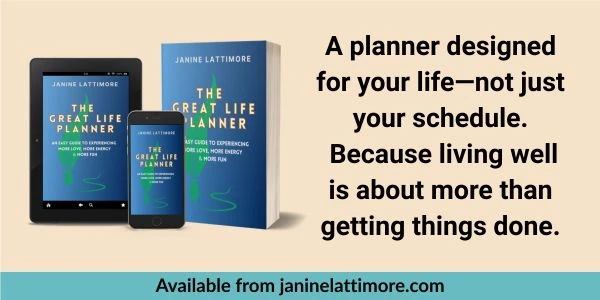
At this point you may be thinking, “but I have tried using planning tools before and they didn’t work for me”. Maybe all they did was organise, or sometimes even add to, your sense of overwhelm, and you were still left feeling like you were rushing, and had little or no time for yourself. The daily planning process I use is quite unique compared to most others in that it starts from a very different premise. The full theory behind this and complete daily templates are available in my book The Great Life Planner. What I am giving you here is the simplified version that I am currently using on a daily basis. It is enough to get you started, and if you enjoy it and want to explore the framework more deeply, then the book goes into much greater detail.
A Different Way to Plan Your Day
There are two primary differences to how I plan my days - the morning intention setting questions I ask and that I don’t plan to a rigid time schedule, I plan to a sequence schedule. I plan the order I will do things in rather than the time I will do them in. I am not saying this is what everyone should do, but it works for me. If I try and plan to do things at and in particular times, I usually can’t keep to it and then that stimulates a feeling of stress and dissatisfaction for me. Simplifying my schedule to a sequence of tasks where I do the most important things first, enables me to feel a freer sense of flow and more relaxed because I know that if I accomplish the most important task/s for the day, then anything else I get done is almost a bonus. Working this way enables me to feel far more satisfied as I move through my day and also at the end of the day, rather than feeling uncomfortable about all the ways I didn’t stick to my time schedule or get through everything on my list.
Four Questions to Start Your Morning with Intention
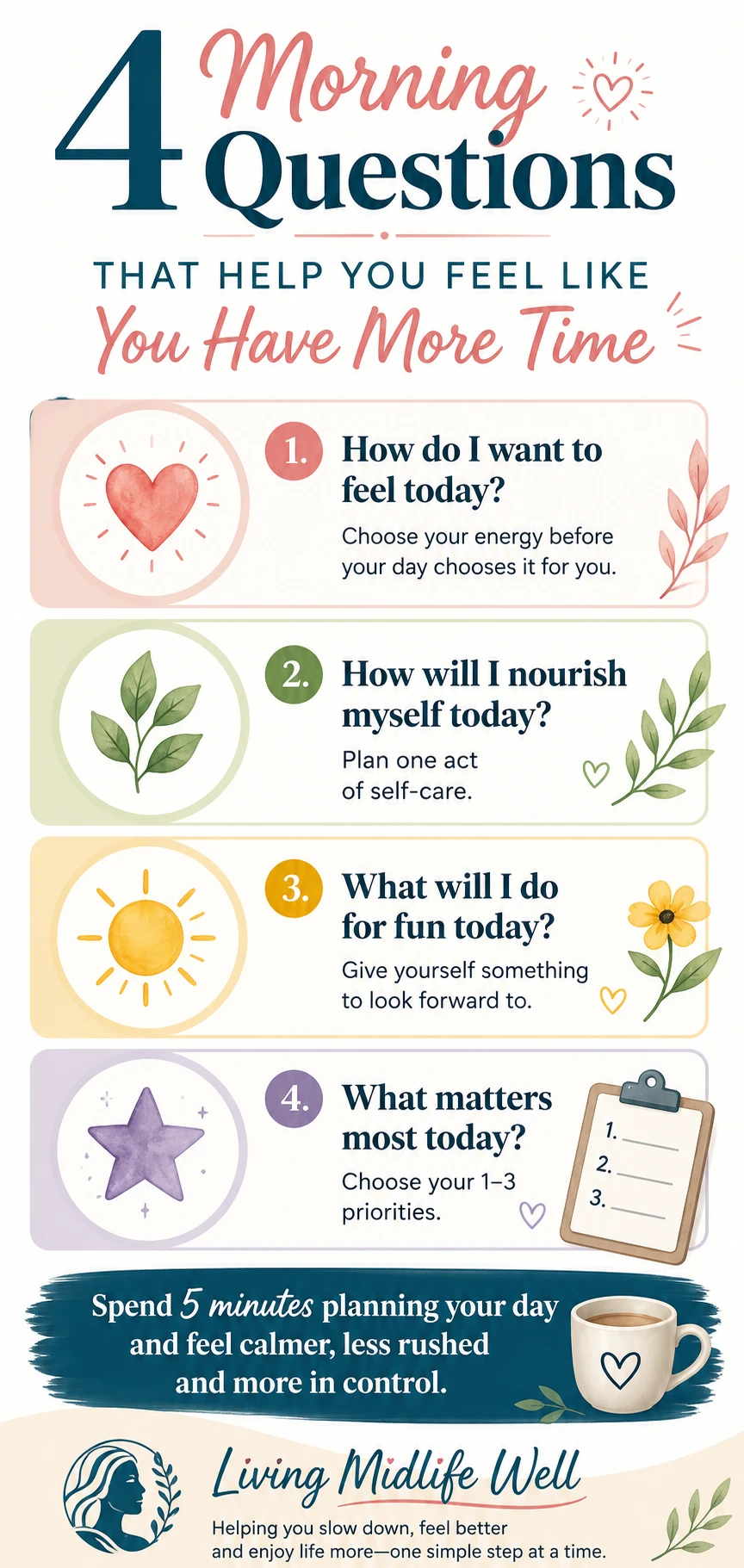
Here are the four focus questions I ask as part of my morning planning.
-
How do I want to feel today and what do I want to embody?
-
How am I going to nourish myself today?
-
What am I going to do for fun or enjoyment today?
-
What is most important to me today?
These questions are very intentional. Let’s look at each one in turn.
How do I want to feel today and what do I want to embody?
How you feel is the energy you bring to the day. Most people don’t think about how they want to feel as something they can choose to create. For the majority of people feelings are a reaction to what they experience i.e. something causes you to feel something. Taking a moment to decide at the start of the day what emotional energy you want to flow in and who or what you want to embody, sets the tone for your day in a powerful way and puts you in an intentional, proactive state to begin your day. The energy state you are in influences both how you interact with the world and what is drawn to you from the world.
How am I going to nourish myself today?
This question is to prompt you to consciously plan self-care into your day. It may be the regular habits that you do or it may be something additional. When answering this question is it very beneficial to take a moment to tune in with yourself and ask “What do I need today?”. Regular self-care habits are great and it is good to remind yourself of what you do to take care of yourself, and it is also important to acknowledge when you need something more at this particular time.
What am I going to do for fun or enjoyment today?
Just as self-care is important, so is enjoyment and fun, and people very rarely plan this into their everyday lives. The feeling of “not having enough time” is often tied to not having enough free play, creativity and pleasure in our lives. This can lead to a sense of dissatisfaction that creates stress and a feeling of life being too hard. It is important for your health and wellbeing to have frequent things in your life that you enjoy and can look forward to. I also recommend that you include things that are not just watching your favourite show on TV, or playing a video game you love. These are okay, but if that is the only pleasurable activities that you have in your life, then you are not fully expressing yourself or actively engaging with life in a creative way. You are simply passively consuming and probably getting stuck in a routine of passively consuming, which can actually drain your energy long term.
What is most important to me today?
This question is to help you identify the 1-3 things that are most important to you today. These are the things that you prioritise doing or engaging with for the day. Identifying just 1-3 things that are most important makes your to-do list intentional and manageable. Ticking these things off is all you really “have” to do today. Consequently, I aim to do these things at the beginning of the day if I can because once they are done - whatever else I do feels like achieving extra credit.
The Real Secret to Feeling Like You Have More Time
Creating more time is not so much about getting more hours in the day, it is to do with shifting how you think about the time you have, and about being intentional with your focus and priorities. You can’t get more time, but you can reclaim your time. When you consciously plan even small elements of self-care and enjoyment into your day, then not only do you get to do those things, but you also have the sense that you have time for yourself. Taking 5-10 minutes in the morning to plan your day in this way gives you a spacious pause where you can connect with what is truly important to you and move into your day proactively rather than jumping straight onto the fast moving treadmill of whatever life is throwing at you. It doesn’t necessarily physically give you more time, but it helps you to feel less overwhelmed and rushed and more decisive and nourished.
Just One Thing: Start with One Morning Question
This week’s just one thing action point is to begin with the first question on the list. For the next week, every morning when you wake up, while you are still lying in bed, before you look at your phone, ask yourself,
How do I want to feel today and what do I want to embody?
Notice what comes up and then make an intentional choice.
Notice how that changes the way you move through your day.
As always, I would love to hear your feedback on the ideas in this article and if you try the Just One Thing action point, then what did you experience from it?
Aroha nui, much love
Janine
Frequently Asked Questions
How can I stop feeling rushed every day?
Feeling rushed is often less about how much you have to do and more about how you approach your day. Taking just five to ten minutes each morning to set an intention, choose your priorities and plan some self-care can help you feel calmer, more focused and more in control.
Can morning intention setting really make a difference?
Yes. Beginning your day with intention helps shift you from reacting to life to consciously choosing how you want to experience it. It creates a pause before the busyness begins, helping you make decisions that better reflect your values and priorities.
What are the four morning questions?
The four questions are:
- How do I want to feel today and what do I want to embody?
- How am I going to nourish myself today?
- What am I going to do for fun or enjoyment today?
- What is most important to me today?
Together, these questions help you care for your wellbeing while focusing on what matters most.
How long does this morning planning practice take?
Most days it takes only five to ten minutes. The goal isn't to create a detailed schedule but to spend a few quiet moments setting your intentions before the demands of the day begin.
What is sequence planning?
Sequence planning means deciding the order you will complete your tasks rather than assigning each one to a specific time. For many people, this creates a greater sense of flexibility and flow because the focus stays on completing the most important tasks first instead of trying to follow a rigid timetable.
Why doesn't traditional time management work for everyone?
Many planning systems focus only on productivity and scheduling. If your day doesn't go exactly as planned, it's easy to feel like you've failed. A more flexible approach that includes your wellbeing, enjoyment and priorities can feel more realistic, sustainable and satisfying.
Can planning actually help reduce stress?
Yes. Planning can reduce decision fatigue by helping you decide in advance what matters most. Instead of constantly reacting to everything that comes your way, you have a clearer sense of direction, which often reduces feelings of overwhelm and stress.
How can I feel like I have more time?
While you can't create more hours in the day, you can change how you experience the time you already have. Prioritising what matters most, intentionally making space for self-care and enjoyment, and reducing unnecessary decision-making can help you feel less rushed and more present throughout your day.