
Why Is It So Hard to Find Time to Exercise?
Between demanding jobs, family responsibilities, caring for aging parents, and managing a home, midlife can feel like a constant juggling act. When time is short, exercise is often the first thing to disappear from your daily to-do list. The gym session gets skipped. The yoga class is postponed. The lunchtime walk or run quietly falls off the calendar. Most of us know that regular physical activity is essential for our health, energy, and wellbeing, but unlike missing a work deadline or taking a rain check on picking up our kids from school, there are no immediate consequences for skipping a workout.
Sometimes, it’s not even that we have an actual shortage of time, but a perceived one. Stress and overwhelm narrow our thinking and increase our sense of time being scarce, and psychologically, setting aside an hour or more to go to a fitness session feels unmanageable. Added to that can be the the fact that you find long exercise sessions hard and/or boring and you have even more reason to strike it from your daily schedule. However, if you’ve ever wondered how to stay fit when you don’t have time to workout, perhaps the problem isn’t your motivation, but rather the way we’ve been taught to think about exercise.
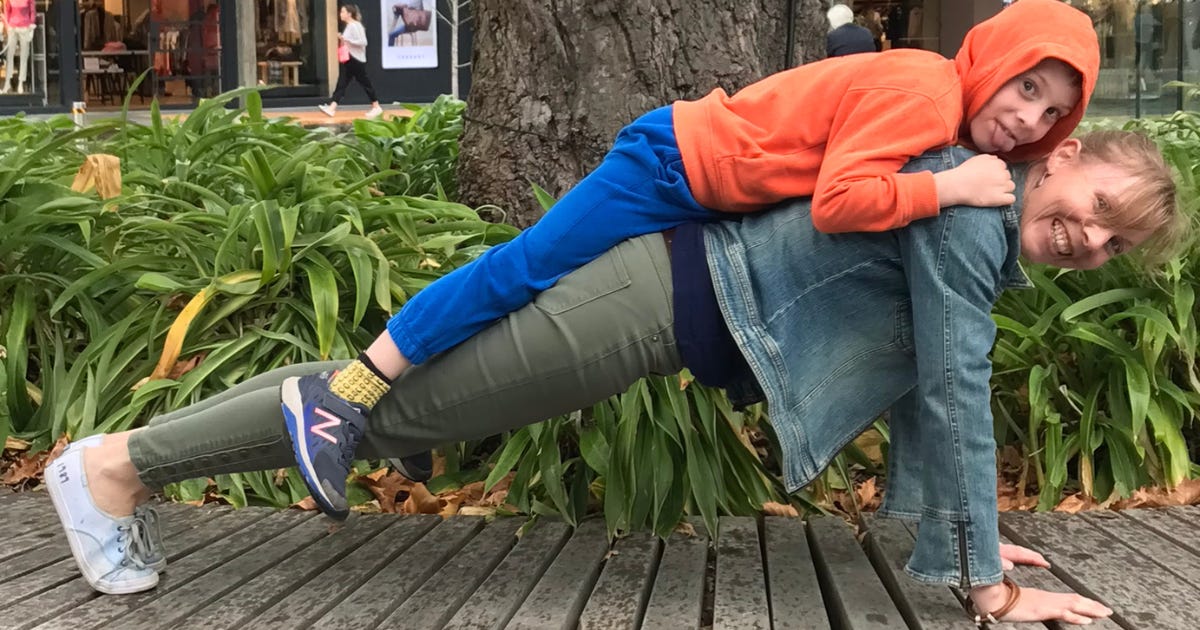
(my son helping to add some weight to my plank exercise (2019?))
How to Stay Fit When You Don't Have Time to Exercise
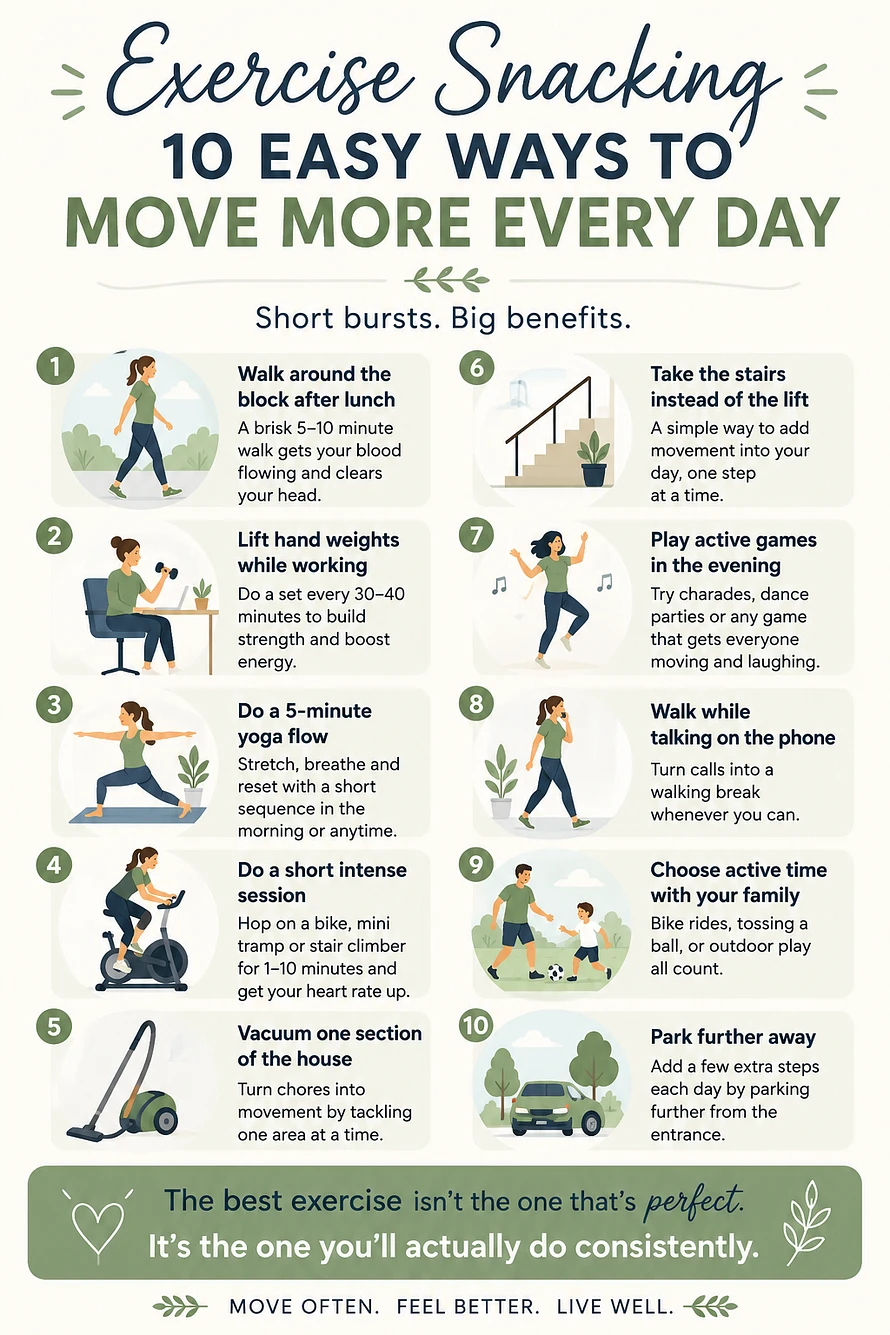
If not having time to exercise is a consistent problem for you then “exercise snacking’ could be the solution. Exercise snacking is when you include short bursts of activity of 1-10 minute blocks through your day. This could be things like:
-
going for a short walk round the block after lunch
-
doing a set of hand weight lifts every thirty to forty minutes when you are working at a computer
-
doing a yoga flow sequence as part of your morning routine
-
doing a short intense session on a stationary bike, mini tramp or stair climber machine
-
vacuuming one section of the house at time in between sitting tasks
-
taking the stairs instead of the lift
-
playing active games in the evening like charades
Why Exercise Snacking May Be Closer to How Humans Were Designed to Move
Doing short bursts of exercise throughout the day is more like how people traditionally engaged with physical activity. The idea of doing exercise sessions and going to the gym is a modern concept and construct and possibly not the healthiest one. The human body evolved with engaging in lifestyle based activity over the course of the day that used a variety of muscles all the time such as walking, running, digging, hunting and climbing trees and hills. The longest lived people groups in the world still live these kinds of naturally active lifestyles including walking as the main form of transport and doing outdoor work or household chores manually. People living in modern cities use elevators and escalators instead of stairs, drive instead of walk, use dishwashers and washing machines instead of washing dishes and clothes by hand, buy food instead of growing it, and hire people to do even minor repair work around the house instead of fixing things themselves. Most of us live sedentary lifestyles where we sit down to do our jobs and sit down for our leisure activities. Then we try to make up for all that sitting and inactivity by doing an hour long fitness session several times a week or maybe just once a week. Our bodies evolved for frequent movement, not occasional workouts. Exercise snacking is a practical way to return to that pattern.
What Are the Benefits of Exercise Snacking?
Mini Workouts Take Less Time
Probably the main benefit of exercise snacking is that it takes much less time than going to the gym or a class. You can incorporate mini workouts into your day rather than having to carve a large block of time out of your day to do a longer fitness workout. The shorter duration also facilitates two other benefits – it is less likely to get boring because it is so short, and it is easier to get motivated to do it because it only takes a few minutes.
I haven’t been to a gym or regular exercise class since I was a group fitness instructor about seven years ago. Since then, I have been meeting my physical wellbeing needs through exercise snacks, movement throughout the day and active leisure. For example, I love to go for long outdoor walks as a recreational activity and I also love to dance. I live a very full life and trying to fit in going to an hour long fitness session several times a week feels challenging to me in terms of time and in terms of the overthinking that goes on about it in my head – the internal argument about why I should go, but I don’t really want to, and I feel stressed about the time it will take up, but I know it will benefit me – I think many of you may be able to relate to that kind of internal back and forth dialogue. Exercise snacking takes away much of that mental negotiation because it feels achievable. Instead of asking yourself to find an hour, you're simply asking yourself to move for a few minutes.
Staying Active Gives You Brain Breaks
Another benefit that I find from doing daily exercise snacking is that it gives regular brain breaks; a time to let my mind wander and process freely or have the equivalent of a white noise break if I am counting repetitions or timing for a movement. Incorporating these kinds of body and brain breaks through the day helps with my productivity because during these breaks I often have ideas or answers come to me that have been blocked when I have been intensely thinking about something. When we are extremely focused on something our brain and our body can get stuck in one pathway. Moving your body activates different brain pathways and shifts your visual perspective allowing you to physically and mentally see things differently.
Movement Breaks Create a Healthier Balance
Lastly, engaging in short bursts of exercise through the day creates a daily routine that is a closer match to traditional active lifestyles. Instead of scattering a few long intense exercise sessions into a largely sedentary lifestyle of sitting in cars, at work, in front of the computer or TV, or at a bar, it creates a more even balance and rhythm of activity and sitting throughout the day which is easier on the body.
Is Exercise Snacking as Effective as Long Workout Sessions?
We have established that exercise snacking is more convenient and easier to engage with than longer fitness sessions, but is it as effective in terms of your physical health? The answer is yes. Studies have shown that in almost every way exercise snacking has the same impact on physical health as longer exercise sessions.
What Does the Science Say About Exercise Snacking?
Improves cardiovascular fitness
Clinical trials found that people who did a few short, hard bursts of activity (like climbing stairs quickly) throughout the day saw meaningful improvements in cardiorespiratory fitness which is the ability of your heart, lungs, and vascular system to supply oxygen to working muscles during sustained physical activity. In other words, exercise snacking builds your cardiorespiratory fitness in a similar way to longer cardio workouts.
Helps regulate blood sugar
Exercise snacking may control blood sugar even better than one continuous workout. When people did short bursts of exercise right before meals, their blood sugar and insulin spikes improved more than when they did a single, longer bout of continuous exercise. In people with type 2 diabetes, breaking up sitting with just 3 minutes of walking every half hour cut post-meal blood sugar spikes by about 39% and insulin spikes by roughly 36–37%.
Lowers blood pressure
Exercise snacking has been shown to lower blood pressure throughout the day, rather than just once. A single workout gives you one temporary dip in blood pressure. Spreading activity across the day instead gives your body repeated “resets”. In studies, each short burst was shown to lower blood pressure and stress hormones compared to sitting still.
Supports healthy ageing and longevity
People who engaged in an average of about 3 short, vigorous bursts of activity a day (roughly 4–5 minutes in total) had a 38–40% lower risk of dying from any cause or from cancer, and a 48–49% lower risk of dying from heart disease, compared to people who got no vigorous movement at all.
May lower cancer risk
In one large study, just 3–4 minutes of vigorous activity a day was linked to a 17–18% lower risk of developing cancer in people who don’t otherwise exercise.
Builds strength and stamina
Exercise snacking has been shown to build strength and stamina in older adults, in a similar way to structured training. Short daily bursts of activity significantly improved muscular endurance in adults 65 and older. While studies on this have only been done on older adults, it is likely that the results would be similar for people in the midlife bracket.
Why Consistency Matters More Than Workout Length
The other thing that studies on engaging in these kinds of frequent mini workouts show resoundingly is that people are far more likely to do it. Many of the studies that have been done on exercise snacking compare people engaging in a programme of short bursts of exercise daily compared to people who are not exercising. If you are struggling to make time to go to the gym or a fitness class regularly then you could fall into the category of “people who are not exercising” despite your best intentions to be otherwise. With exercise and physical health, consistency rather than duration, may be what ultimately drives results. Short bursts of exercise done daily are far more beneficial than doing one long intense workout once a week. When it comes to how exercise when you are busy, it’s not about finding more time, it’s about identifying ways you can move more often as part of your daily life.
Why Exercise Snacking Is Especially Beneficial After Forty
There is another reason exercise snacking is particularly beneficial for people over forty and it is linked to hormones. One of the key stress hormones, cortisol, reduces the production and activity of estrogen, progesterone and testosterone in the body, especially after age forty. Added to this, for those with a female body, is that estrogen helps regulate cortisol, and decreasing levels of it can cause cortisol to remain elevated for longer periods after a stressful event. Cortisol naturally rises during any physical activity to help mobilise glucose and fuel your muscles. These acute, short-term spikes are completely normal, resolve quickly during recovery, and actually support long-term hormone health and baseline stress reduction. As exercise snacking typically involves low-to-moderate intensity movements, the cortisol response is significantly smaller than what you would see during a prolonged exhaustive workout. For this reason, mini movement breaks have less of a negative impact on estrogen, progesterone and testosterone levels than longer, high intensity workouts. This is crucial factor from age forty on when your sex hormone levels are naturally starting to decrease.
There is another factor to be aware of too. Any form of exercise, including exercise snacking, causes detrimental, elevated cortisol levels when your body has insufficient fuel. If you engage in physical activity first thing in the morning on an empty stomach, the cortisol response can be slightly more pronounced. Having a small, protein-rich snack or meal beforehand can help balance this response. Whenever your body is chronically over-stressed or under-fueled any form of exercise may cause it to struggle to bring cortisol back to baseline, causing it to remain elevated.
The Best Way to Exercise Snack Over Forty
When to Exercise Snack
You can engage in exercise snacking at any time during the day, but there are a couple of key points to note. Fuel up first. That doesn’t mean you have to eat right before exercising. It means eating three nutritious meals a day to keep your blood sugar levels stable. As I noted above, in the morning have a protein rich snack or meal (breakfast) before you do any exercise that will put a demand on your body. During the day, exercise snacking just before or just after a meal can help to keep your blood sugar and insulin levels stable.
What Movements to Do
One of the best exercise snacking activities for people over forty is walking. Even if it is just a quick walk five minute walk round the block. It is low to moderate impact, improves muscle strength and cardiorespiratory function and it also helps to regulate the nervous system and reduce stress. When your nervous system is balanced, cortisol, estrogen, progesterone and testosterone work in better rhythm which supports energy, metabolism, and recovery. The rhythmic action of walking is very calming to your nervous system. With walking you can match your pace to your energy capacity - a slower stroll for re-balancing yourself, or a faster pace for more physical exercise benefits.
Walking at a quick pace where you are breathing deeply, but can still talk in full sentences burns fat efficiently, improves body composition, lowers stress and inflammation and regulates sleep and daily energy. To take walking to the next level you can do Sprint Interval Training (SIT). This involves including 2–8 short sprints of about 20 seconds each, followed by full recovery walking. These brief efforts improve insulin sensitivity, mitochondrial health (energy levels), and bone strength. If sprinting isn’t your thing, you can do hill walking instead.
Walking can be the base, and then add in some strength training elements. These may be body weight exercises like squats, press-ups, lunges, chin-ups, planks, burpees or mountain climbers. Or, they may be a set of exercises with hand held weights (free weights) such as bicep curls, single arm rows, shoulder presses, or weighted step ups.
A Well Rounded Workout: Walking + Strength Training + Sprints/Hill Climbs
Doing a variety of strength training, daily walking, and adding in a few sprints or hill climbs during 3-4 walks each week will provide a well-rounded workout that targets cardiorespiratory function, muscle and bone strength, energy production and balancing blood pressure and blood sugar levels. As a bonus will also help boost collagen production and balance your hormones.
Make Everyday Movement Count
As an added bonus you can aim to be as active as you can in terms of living your daily life. For example, walk or cycle to places whenever possible, use stairs instead of lifts and escalators, wash the dishes by hand, hang clothes on a washing line instead of putting them in the dryer, and engage in active recreational activities like hiking, dancing, cycling or playing sports. You can even make movement into connection rituals with things like doing the evening dishes together as a couple and chatting about your days, or playing charades in the evening as a family, or meeting up with a neighbour every morning for a sunrise walk around a local park. The best exercise isn't necessarily what is scientifically perfect, it’s what you'll actually do consistently.
Just One Thing to Try This Week
This week’s Just One Thing action point is to think of one way that you can include an exercise snack into your daily schedule and then do it daily for a week.
It would be great if you write what you decided to do in the comments. I would be interested to know, and it may help give other people ideas.
Also, let me know in the comments if you would be interested in knowing the daily movement breaks that I do and I can put together some video demonstrations.
Aroha nui, much love
Janine
Frequently Asked Questions About Exercise Snacking
What is exercise snacking?
Exercise snacking is the practice of breaking your daily physical activity into short bursts of movement that typically last between one and ten minutes. Rather than completing one long workout, you spread mini workouts throughout the day by doing activities such as walking, climbing stairs, strength exercises, yoga, or cycling.
Does exercise snacking really work?
Yes. Research shows that short bursts of exercise performed regularly can improve cardiovascular fitness, blood sugar regulation, blood pressure, muscle strength, and overall health. In many cases, exercise snacking produces similar benefits to longer workout sessions, particularly when it becomes a consistent daily habit.
How long should an exercise snack be?
An exercise snack can be as short as one minute or as long as ten minutes. The key is to move regularly throughout the day rather than remaining sedentary for long periods. Even a five-minute walk, a quick set of squats, or climbing a few flights of stairs can make a meaningful difference.
Is exercise snacking better than one long workout?
For many people, yes. While long workouts are still beneficial, exercise snacking is often easier to fit into a busy schedule, making it much more likely that you'll stay consistent. Consistency is one of the strongest predictors of long-term health benefits, so several short movement breaks each day can often be more effective than an occasional long workout.
Is walking considered exercise snacking?
Absolutely. Walking is one of the best forms of exercise snacking because it is accessible, low impact, and suitable for most fitness levels. A brisk five to ten-minute walk after meals or between periods of sitting can improve blood sugar regulation, support cardiovascular health, reduce stress, and increase daily movement.
Is exercise snacking good for people over forty?
Exercise snacking can be particularly beneficial after forty because it encourages regular movement without placing excessive stress on the body. Frequent, low-to-moderate intensity activity helps support muscle strength, heart health, metabolism, hormone balance, and healthy ageing while avoiding some of the prolonged cortisol response that can occur with longer, high-intensity workouts.
How many exercise snacks should I do each day?
There isn't one perfect number. A good goal is to look for natural opportunities to move throughout your day. Three to six short movement breaks is a great place to start, but even adding one or two exercise snacks each day is a positive step towards better health.
What are some easy exercise snack ideas?
Some simple exercise snacks include taking a brisk walk around the block, climbing the stairs instead of using a lift, doing a few minutes of bodyweight exercises such as squats or lunges, lifting hand weights while working from home, completing a short yoga flow, dancing to your favourite song, or taking a quick walk after meals.
What's the best exercise if I don't have time to work out?
The best exercise is the one you'll actually do consistently. If your schedule makes hour-long workouts difficult, building movement into your daily routine through exercise snacking is one of the simplest and most effective ways to improve your health, fitness, and energy levels over time.
Sources